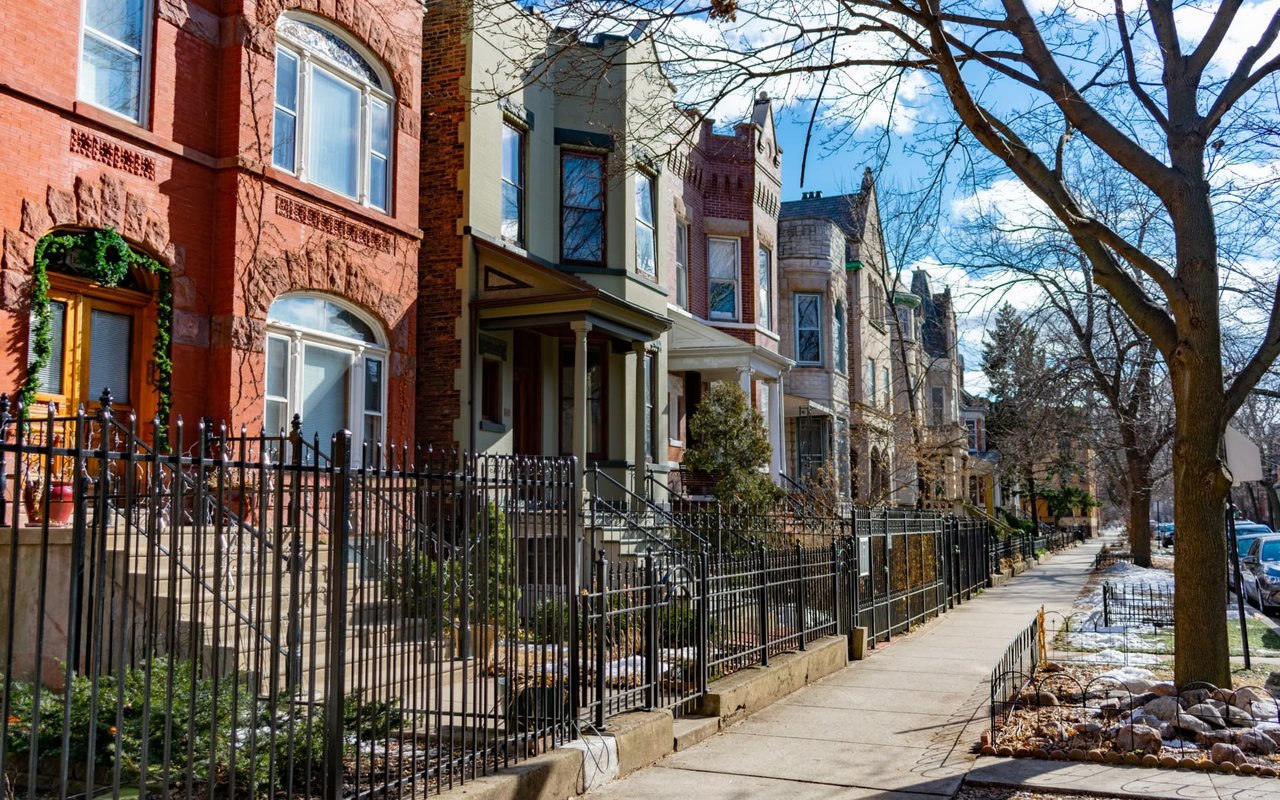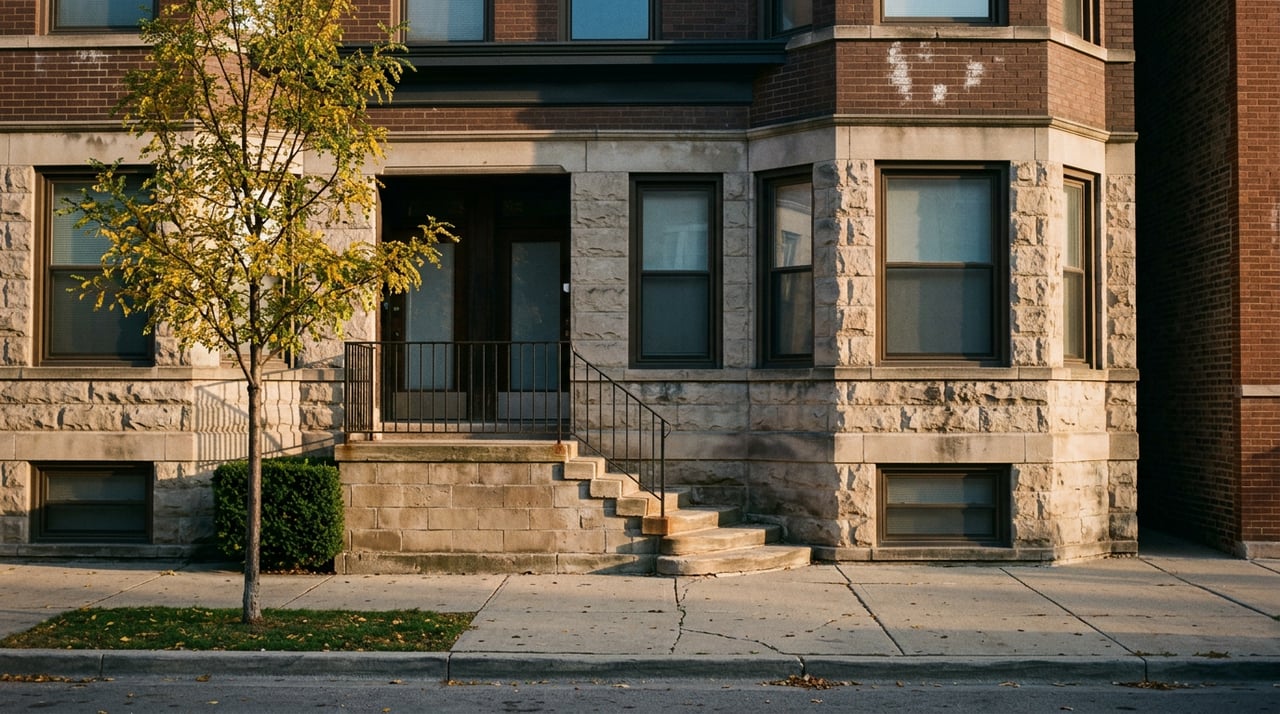
A two-flat a block from the park's eastern edge and a two-flat a block past Kedzie Avenue get filed under the same neighborhood name on every listing site. They are not competing in the same market. One is trading against Wicker Park comps. The other is trading against the price of the vacant lot next door, which increasingly belongs to a nonprofit developer with city and federal money behind it, not a private buyer with a mortgage pre-approval.
That split has been building for years, but the numbers from the first quarter of 2026 are the clearest evidence yet that it has hardened into two distinct markets, and the direction each one is moving should change how an investor or house-hacker reads "Humboldt Park" on a listing.
One Name, Two Markets
Humboldt Park runs from Western Avenue to Pulaski Road, and from North Avenue down to the Union Pacific tracks. Sacramento Boulevard splits it roughly down the middle, with the eastern half sitting closer to West Town, Logan Square, and the Blue Line, and the western half stretching toward Garfield Park.
By June 2026, the blended, neighborhood-wide number that shows up in most searches put the median sale price for a Humboldt Park house at $475,000, up 5 percent from a year earlier, with homes selling in an average of 27 days. That is the figure most buyers see first, and it reads like a single, steadily appreciating market.
It isn't one market. Split the same period of sales data by side of the park and two very different stories emerge.
| East Humboldt Park | West Humboldt Park | |
|---|---|---|
| Median sale price (Q1 2026) | $617,000 | $378,000 |
| Year-over-year change | +17.0% | -1.9% |
| Price per square foot | $322 | $239 |
| Price per square foot, YoY | -10.6% | +28.5% |
| Average days on market | 56 (vs. 77 a year prior) | 69 (vs. 129 a year prior) |
Read the top row alone and the east side looks like the hot market, up 17 percent while the west side actually dipped. Read the price-per-square-foot row and the story flips. East Humboldt Park's per-foot value fell over the same period. West Humboldt Park's rose by nearly 29 percent, the fastest-moving number on the table.
The Number That Matters Isn't the One Everybody Quotes
A rising median with a falling price per square foot usually means the mix of homes selling has changed, not that values are cooling. More large, high-end new construction on the east side pulls the median up even if the underlying value of a comparable square foot has softened slightly. A falling median with a climbing price per square foot means the opposite: smaller or more modest sales are dragging the headline number down while the market is quietly paying more for the same space.
For anyone shopping a two-flat or a greystone rather than a single-family teardown, price per square foot is the number that actually describes what you're buying. By that measure, the west side of the park is appreciating faster than the east side, even though it still looks like the cheaper option on paper. That is the reversal most buyers researching this neighborhood from a portal search never see, because nobody splits the data by side of the park before quoting it.
What's Being Built in the Area
The east side priced up first because the pattern that already remade Wicker Park and Bucktown simply continued west along Division Street and the 606 corridor. The west side's faster per-foot growth lines up with a wave of institutional and nonprofit development that has been unusually concentrated and unusually well documented over the past 18 months:
- 1237 N. California Ave. A 40-unit affordable building from Hispanic Housing Development Corporation opened and was fully leased by February 2026, with two-bedroom units renting for roughly $1,120 to $1,450 a month.
- Pedro Albizu Campos Apartments, 1203 N. California Ave. The same developer's earlier 64-unit project opened in May 2024 and still had a waitlist for three-bedroom units as of early 2026.
- 3251 W. Division St. The City Council approved zoning in May 2026 for a $36 million, 44-unit building designed by WJW Architects, with groundbreaking targeted for 2027 and completion expected in late 2028.
- Pioneer Arcade. Hispanic Housing Development Corp. broke ground in January 2026 to convert the historic building into 61 affordable senior housing units.
- Pioneer Bank. In March 2026, the city selected Park Row Development's "Team Pioneros" through the Invest South/West program to restore the nearly century-old Pioneer Trust & Savings Bank and build new construction behind it.
- The Ave, 3601 W. KMW Communities broke ground in May 2025 on a 52-unit affordable development designed by Gensler, working with Preservation of Affordable Housing and Neighborhood Housing Services of Chicago, with completion expected by fall 2026.
- 3300 W. Pierce. A zoning application filed in August 2026 proposes converting a former church into 20 rental units.
That is not a handful of scattered projects. It is a sustained pipeline concentrated west of the park and along the Division Street and California Avenue corridors, run largely by a developer with a long track record of acquiring land in the same stretch.
Why Institutional Capital on One Side Changes the Math on the Other
A Ph.D. housing researcher at the University of Illinois Chicago, tracking this same pattern, has described the pressure as moving westward from already-gentrified Wicker Park and Bucktown, with the area west of Kedzie next in line, and has compared the pull of the 606 trail to that of the Blue Line or Milwaukee Avenue as an amenity that draws investment.
In a Chicago Sun-Times report, Alderwoman Jessie Fuentes, who represents Humboldt Park's 26th Ward, called Humboldt Park "one of the fastest gentrifying neighborhoods in the city."
For a private buyer, the practical effect is this: when a well-capitalized nonprofit developer needs a vacant lot or an underused commercial building on the west side, it can pay a price that reflects tax credits, city subsidy, and long-term financing a small investor doesn't have access to. That doesn't suppress nearby land values. It anchors them, because every land sale on that stretch becomes a data point for the next appraisal, whether the buyer is subsidized or not. The east side, meanwhile, has already absorbed most of the speculative capital chasing proximity to Wicker Park and West Town, which is consistent with a market where headline prices keep climbing but per-foot value has started to plateau.
What This Means If You're Actually Shopping for a Two-Flat
Humboldt Park's housing stock still favors this kind of purchase on both sides of the boulevard. In East Humboldt Park specifically, roughly a third of homes sit in two-unit buildings and another quarter are three- to four-unit structures, with a typical building dating to around 1931. Brick two-flats and greystones aren't a niche product here. They're the default across the neighborhood, west side included.
A few things follow from the East/West split for anyone evaluating one of those buildings in 2026:
Location relative to Sacramento Boulevard now matters as much as location relative to the park itself. A two-flat two blocks east of the boulevard and one two blocks west may look identical in a listing photo and behave like two different asset classes.
On the west side, expect to compete with institutional buyers for vacant and underused parcels, particularly near California Avenue and Division Street, where the development pipeline above is concentrated. That doesn't rule out a good purchase. It does mean off-market sourcing and a broker who tracks zoning filings, not just active listings, matters more here than in a neighborhood without this kind of activity.
On the east side, the slower per-foot growth suggests the easiest appreciation has already happened. A two-flat purchase there is now closer to a Wicker Park-adjacent bet than a Humboldt Park value play.
Pre-1940 construction means inspection findings tend to cluster in predictable places: masonry and tuckpointing, flat roofs and parapets, and lead paint disclosure for anything built before 1978. None of that is unique to this neighborhood, but the concentration of century-old greystone stock here means a buyer should budget for it rather than treat it as a surprise at inspection.
FAQ
Does a new affordable housing development next door hurt my property's resale value? The data here doesn't support that assumption. Price per square foot on the west side, where most of the recent affordable pipeline sits, rose faster than the east side over the period measured. Land near active development corridors has been trading up, not down.
Is West Humboldt Park still a value play in 2026, or has the price already moved? The median dollar figure still looks like a value play. The price-per-square-foot trend suggests the market has already started pricing in the change, just not in the number most people check first.
If you're weighing a two-flat purchase in Humboldt Park and want a read on a specific block, not just a neighborhood average, Camille Canales Group tracks this market street by street, including the zoning filings and land sales that don't show up in a portal search. Book a consultation or request a free valuation before you write an offer on either side of the park.
This article is general information, not legal, tax or financial advice. Consult a qualified professional about your situation.