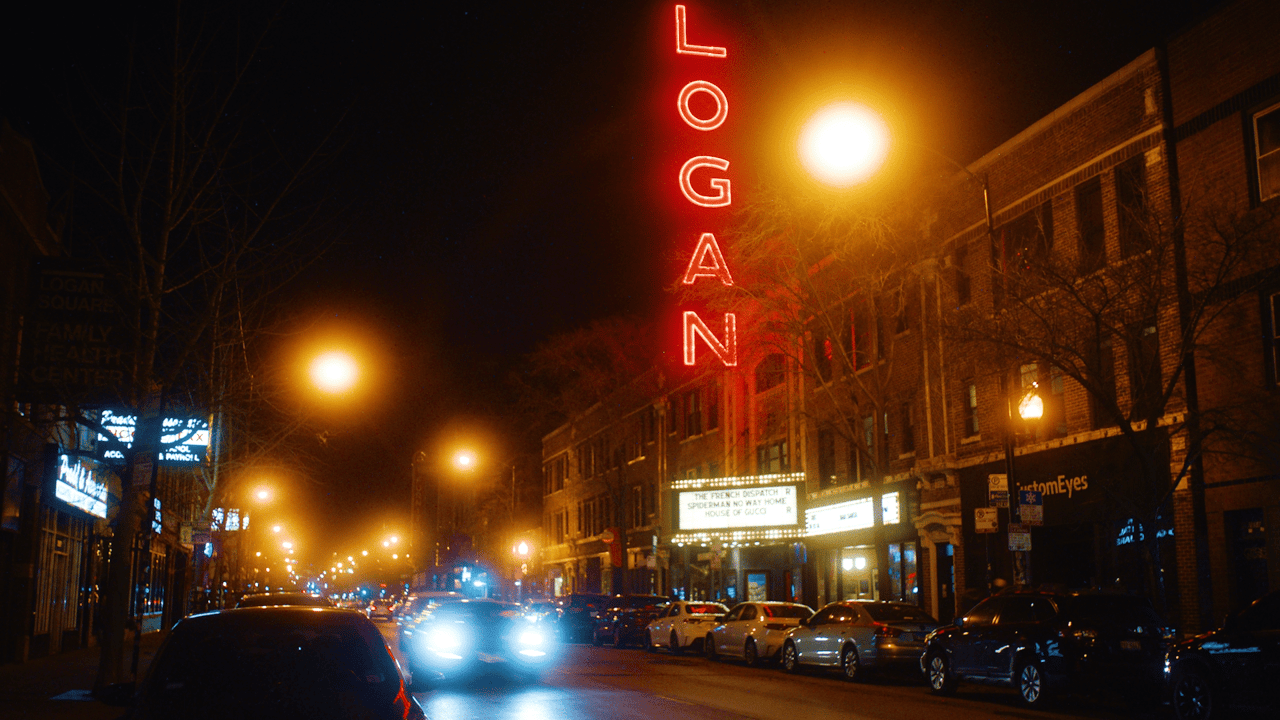
Milwaukee Avenue closes to cars again this Sunday, August 30, from 10 a.m. to 6 p.m., between the North/Damen intersection and Ashland Avenue. If that sentence sounds familiar, it should. This is the second year of Meet Me on Milwaukee, and on paper almost nothing has changed since the pilot wrapped up last October: same three Sundays a year (the last one in August, September, and October), same boundaries, same organizers in Ald. Daniel La Spata's office and the Wicker Park Bucktown Chamber of Commerce. The one visible tweak is an extra hour tacked onto the end, pushing the close from 5 p.m. last year to 6 p.m. this year.
The event held still. The street did not.
Walk that stretch of Milwaukee today and you're walking past a different set of storefronts than the ones that lined it during last October's closure. A decade-old breakfast spot moved in two blocks south. A Chinatown institution finally opened its long-rumored second location. A bodega-style deli took over a restaurant that didn't survive the year. None of that happened because of Meet Me on Milwaukee, but all of it means this Sunday's car-free stroll passes a corridor that looks meaningfully different than it did twelve months ago, even though the road closure itself is nearly identical.
The mechanics haven't moved much, and that's on purpose
The basics are simple enough to repeat here because they matter if you're planning around them. Milwaukee Avenue shuts to car and bus traffic between Damen/North and Ashland on the last Sunday of August, September, and October. This year that's August 30, September 27, and October 25, running 10 a.m. to 6 p.m. A no-parking and tow zone kicks in at 12:01 a.m. the night before, so if your car is street-parked in that stretch, move it early. The 1st Ward's event page is also clear that this is not a street festival: no open containers, though restaurants along the route can still serve outdoor dining where they're licensed to.
What's more interesting than the logistics is what didn't happen. After the 2025 pilot, plenty of people asked for more. Attendees told Block Club Chicago they wanted the closures monthly through the summer, or even weekly. La Spata said he's open to it eventually, but described each event as a heavy coordination lift with city departments, and the chamber's Pamela Maass put it more bluntly: it's only special if it stays special. So instead of scaling up, the program added one hour and kept the calendar exactly the same. That restraint is itself a kind of signal. Nobody running this event is trying to turn Milwaukee Avenue into a permanent pedestrian mall. They're trying to prove, three Sundays a year, that the street can hold a different kind of energy without breaking anything.
What the closures actually did for the block
The reason this event has staying power isn't the novelty of car-free pavement. It's what happened to foot traffic once the cars left. Using data from Placer AI, Maass has said the closed stretch saw roughly triple the pedestrian traffic during last August's event compared to the same Sunday a year before the pilot started, and about double during the September and October dates. For a corridor Maass describes as home to 150 brick-and-mortar businesses, that kind of swing is not a rounding error.
Ask the shop owners and the numbers get personal. Rebecca George, co-owner of Volumes Bookcafe at 1373 N. Milwaukee Ave., said her bookstore and attached coffee shop saw about double the usual Sunday traffic during last year's closures, enough to help cover payroll for the month. Maddie Rogers, who owns Vintage House Chicago at 1433 N. Milwaukee Ave., said each successive event brought in more people than the last, as word spread that a walkable, car-free version of the street existed a few times a year. Mojo Spa owner Amanda Kezios, who has run her handmade beauty product shop through the Great Recession, the pandemic, and now tariff-driven ingredient shortages, called Meet Me on Milwaukee one of the "experiential" shopping events, alongside Wicker Park Fest and the neighborhood's farmers market, that reliably bring in customers who might not otherwise walk through her door.
That's the case the numbers make for keeping the event going. It's also the reason this year's version is worth watching more closely than a simple repeat.
The corridor itself changed while the calendar didn't
Since last October's closure, three businesses that anchor conversation about the neighborhood's food scene have opened along or just off this same stretch. Ann Sather, the Swedish breakfast institution longtime Chicagoans associate with Belmont Avenue, opened its new location at 1819 W. Division St. in late July, taking over a Yolk restaurant that had closed the year before. The new spot recreates much of the original Belmont decor and murals, keeps the to-go bakery case stocked with the restaurant's cinnamon rolls, and is adding outdoor seating on Division.
A few blocks over, Qing Xiang Yuan Dumplings, known to regulars simply as QXY, opened its second full-service location at 2018 W. Division St. after a decade of lines out the door at its original Chinatown spot. The Wicker Park location kept nearly the same menu, added an Off Color Brewing collaboration lager brewed with herbal tea, and general manager Jesse Li said the second location exists mostly because regulars kept asking for one closer to the North Side.
On Milwaukee Avenue itself, Chicago Pickle Eatery opened at 1308 N. Milwaukee Ave. this spring, taking over the former home of Angry Crab. It's the third location for owner Mohamad Atieh, who runs two other outposts of the New York-style deli concept in Avondale and Uptown, and said the Wicker Park storefront felt like the right fit for the neighborhood's pace.
None of these three replaced businesses that closed because of Meet Me on Milwaukee, and none of them opened because of it either. But all three sit inside or immediately adjacent to the same blocks that go car-free three Sundays a year, which means this year's closures put pedestrians in front of storefronts that simply weren't there for the pilot.
The same weekend, a second reason to be outside
If you're planning your Sunday around the closure, it's worth knowing that First Fridays, the chamber's self-guided monthly art walk, runs the Friday before, from 6 to 8 p.m., with stops at Jackson Junge Gallery, Tom Robinson Gallery, SoNa Contemporary Art, Torque Ltd., and Prism Spaces, plus a student art showcase from Pritzker Elementary at the chamber's offices. Back to back, that's a Friday evening spent in galleries and a Sunday spent walking a car-free Milwaukee Avenue, both organized by the same chamber, both free.
A few things worth knowing before you head out this weekend:
- Milwaukee Avenue closes to cars and buses between Ashland and the North/Damen intersection, 10 a.m. to 6 p.m. on August 30, September 27, and October 25.
- Cars parked in that stretch after 12:01 a.m. the night before are subject to towing.
- The event isn't a street festival, so open containers aren't allowed, though licensed outdoor dining continues as usual.
- First Fridays Art Walk runs the Friday before each Meet Me on Milwaukee date, 6 to 8 p.m., free and self-guided.
Why this matters more than a repeat event
It would be easy to write this off as the same story from last year with a new date stamped on it. The organizers clearly wanted it to feel that way. Same hours, roughly, same boundaries, same low-key ambition to stay special by staying rare. But a neighborhood doesn't hold still just because an event's format does. The businesses that define a Sunday walk down Milwaukee Avenue in 2026 are not the ones that defined it in October 2025, and that turnover, an established Belmont Avenue name, a Chinatown export, a New York-style deli replacing a shuttered restaurant, tells you something about how quickly Wicker Park's retail identity shifts even when the civic calendar doesn't.
If you're already out there this Sunday, that's the thing worth noticing. Not just that the street is quiet for a few hours, but that the quiet now surrounds a different set of front doors than it did the last time the cars were gone.
Camille Canales and her team at Camille Canales Group live and work in this stretch of the city, which means keeping track of what opens, what closes, and what it means for the neighborhood is part of the job, not a side project. If you're curious what any of this shift in Wicker Park's retail mix says about the housing market around it, or you just want to talk through what's changing block by block, reach out for a consultation or grab a free home valuation whenever you're ready.