Ask a portal for the median home price in West Town and you'll get a single, confident number: somewhere around $700,000 as of the three months ending in May 2026, up roughly 9 percent from a year earlier. That number is real. It is also almost useless if you're trying to figure out what your own search will actually look like, because West Town isn't a market. It's four of them, stitched together under one community-area label, and the gap between the cheapest and most expensive pocket is wide enough to change which neighborhood you end up in without you ever realizing you compromised.
Ukrainian Village posted a median sale price near $870,000 in January 2026, with a sharp year-over-year jump behind it. Meanwhile, condo listings across West Town as a whole carried a median asking price closer to $628,000 in mid-May. Those aren't three snapshots of the same thing measured at slightly different times. They're three different housing stocks, three different buyer pools, and in at least one case, three different decades of construction, all reporting up to the same headline median.
A Number That Describes Everything and Nothing
West Town, as Chicago officially draws it, runs from the Chicago River on the east to an irregular western border that folds in Humboldt Park, bounded by the Union Pacific railroad tracks to the south and the old rail line along Bloomingdale Avenue to the north. Inside that boundary are four distinct market pockets—Ukrainian Village, East Village, Noble Square, and River West—as well as slices of what locals still call East Humboldt Park. Real estate listings routinely fold in Wicker Park too, even though it's its own separate community area with its own identity.
When a market report averages a landmark historic district full of restored greystones against a corridor of worker's cottages that never saw a teardown, the resulting median isn't wrong. It's just not describing any specific block you could stand on. That's the mechanism worth understanding before you start comparing West Town to Logan Square or Bucktown on price alone: the comparison you're making depends entirely on which part of West Town you mean.
Why Noble Square Costs Less Three Blocks From Wicker Park
The clearest illustration of this sits in Noble Square, the pocket generally bounded by the Kennedy Expressway to the east, Ashland Avenue to the west, Division Street to the north, and Chicago or Grand Avenue to the south. Noble Square sits directly east of East Village and within walking distance of Wicker Park and River West, yet it consistently prices below both. That's not a judgment on the neighborhood. It's a function of what's physically there.
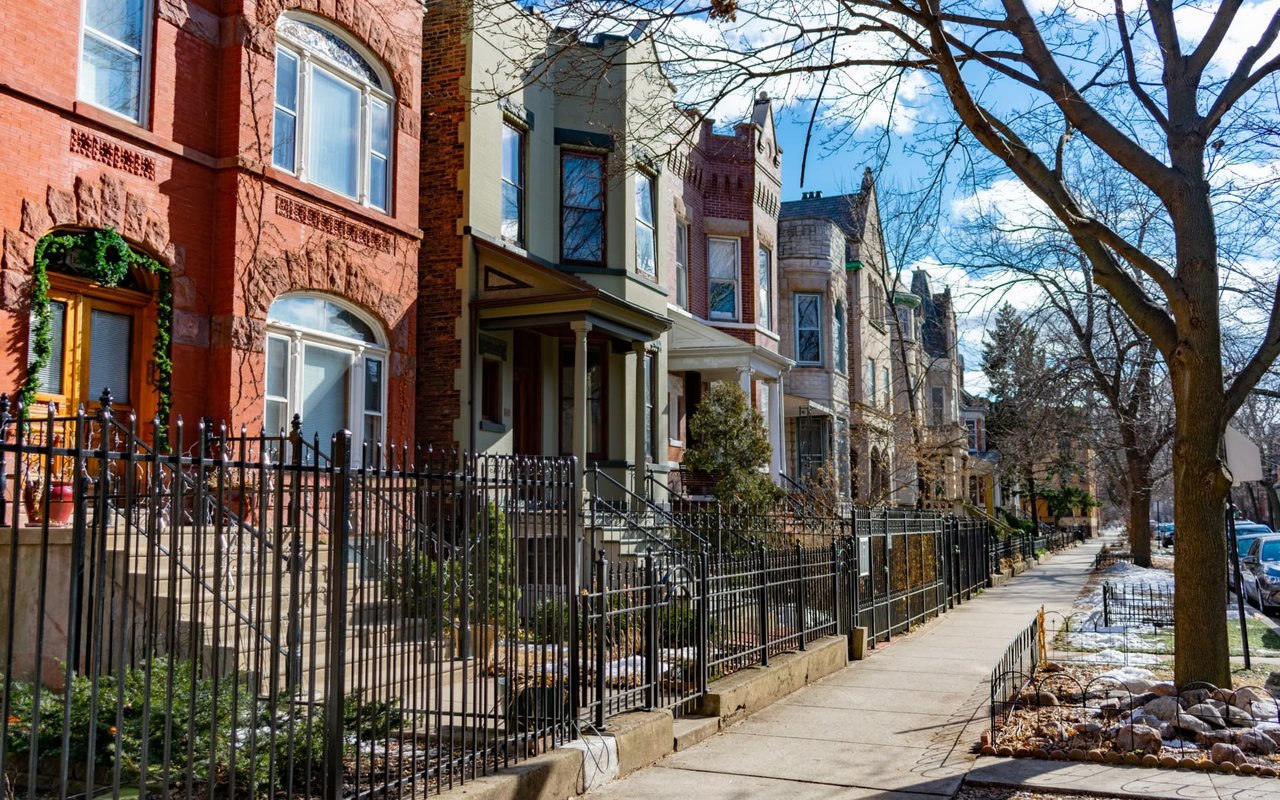
Noble Square's housing stock is dominated by vintage worker's cottages and three-flats, many on narrow lots without parkways, largely untouched by the wave of teardown-and-rebuild construction that reshaped East Village and parts of Wicker Park over the past two decades. Its main civic landmark, Eckhart Park, gives the neighborhood a name and a green anchor, but the neighborhood around it has stayed structurally closer to its early-1900s footprint than its pricier neighbors. Fewer new-construction comps means fewer of the high-end sales that pull a median upward. The Blue Line stop at Chicago and Division sits at the edge of Noble Square too, so transit access isn't the differentiator. Construction era is.
Compare that to River West, the industrial-turned-residential pocket along Milwaukee, Halsted, and Grand, where new luxury towers and boutique elevator buildings have been landing steadily. River West is also where Bally's Casino and its hotel tower are set to open in late 2026. Nearby, an office-to-residential conversion at 688 N. Milwaukee has been permitted. That kind of active new construction is exactly the ingredient Noble Square has largely lacked, and it shows up in the price data.
Here's a rough read of how the pockets currently separate, based on the sources available:
| Micro-neighborhood | Price signal | What's driving it |
|---|---|---|
| Ukrainian Village | Median sale price near $870,000 (Jan. 2026) | Landmark historic district, restored greystones, limited new supply |
| East Village | Trends closer to the West Town-wide median | Steady wave of rehabs and condo conversions over the past two decades |
| Noble Square | Below the West Town median | Vintage cottages and three-flats, minimal teardown activity |
| River West | Wide range, condo listing median near $450,000 (Mar. 2026) but new luxury product pulling upward | Former industrial land now hosting new towers, boutique buildings, and casino-adjacent development |
That range is the real story. A buyer who anchors to "West Town, $700K" and starts touring Ukrainian Village will find themselves priced out fast. The same buyer willing to look two blocks over into Noble Square, or into River West's older condo stock rather than its newest towers, is shopping a meaningfully different number without giving up transit access or proximity to Wicker Park's restaurants and shops.
The Days-on-Market Number Nobody Can Agree On
Ask three sources how fast West Town homes are selling and you'll get three different answers, and that disagreement is itself informative. One neighborhood-level report put the West Town median at 37 days on market as of May 2026, down from 42 days the year before. A separate buyer-focused market summary put West Town's median days on market closer to 58 in February 2026. A third source, tracking condos specifically, showed listings moving in about 29 days with buyers fielding roughly 3 offers each.
None of these are wrong. They're measuring different slices: all property types across the full community area, a single month's snapshot, and condos alone. The spread between 29 and 58 days tells you the same thing the price data does. "West Town" as a single figure smooths over categories that behave nothing alike. A three-flat in Noble Square and a new-construction condo in River West do not sell on the same clock, even if they're both technically inside West Town's boundary.
What has stayed consistent across sources is the competitive posture of the market overall. As of February 2026, West Town's sale-to-list ratio was running close to 99.3 percent, and roughly 30 percent of recent sales closed above asking. Combined with mortgage rates that hovered near 6.0 percent on the 30-year fixed in early March 2026, per Freddie Mac's weekly survey, the math still rewards a clean, well-financed offer over a slow one. A buyer stretching for Ukrainian Village needs financing strength as much as budget. A buyer shopping Noble Square's lower price band has more room to negotiate, but not so much room that a sloppy offer wins.
What This Actually Changes About Comparing Neighborhoods
If you're cross-shopping West Town against Bucktown, Logan Square, or Lincoln Park using the headline median alone, you're comparing an average of four different products against a single, more coherent one. The fix isn't complicated, but it does require asking a more specific question before you fall in love with a number.
- Which sub-neighborhood is this listing actually in? Ukrainian Village, East Village, Noble Square, and River West carry different price bases even within the same zip code.
- Is the comp set for this address pulling from new construction or vintage stock? A three-flat conversion and a ground-up condo tower will not share a fair comparison.
- What's the actual days-on-market figure for this property type in this specific pocket, not the community-area blend?
- For condos and three-flat conversions, what's in the building's reserve fund and are there pending special assessments? That question affects financing approval as much as it affects long-term cost.
None of this means West Town is a harder market to shop. It means the shopping list has to be more specific than the headline suggests. A buyer who widens their search from "Wicker Park or bust" to "Noble Square, if the building checks out" is often solving an affordability problem that looked, on paper, like it required leaving the neighborhood entirely.
FAQ
Is Wicker Park part of West Town? Depends on who's drawing the map. The city's official West Town community area doesn't include Wicker Park, but listing sites and agents frequently fold it in because the two areas border each other closely and share amenities.
Why did Ukrainian Village's median jump so much in early 2026? The available data points to a combination of low inventory and strong demand for its historic housing stock, which includes protected greystones in a landmark district. Limited new supply in a landmark area tends to push medians up faster when demand holds steady.
Is Noble Square a compromise or genuinely a different kind of home? It's a different housing stock, not a downgrade. Noble Square's appeal is the vintage cottage and three-flat inventory itself, plus direct walkability to Wicker Park, East Village, and River West. For a buyer who wants that access without the landmark-district price tag, it's often the more honest fit rather than a fallback.
If you're trying to figure out which pocket of West Town actually matches your budget and your must-haves, that's the exact conversation worth having before you start touring. Camille Canales Group works this corridor block by block, not by community-area average, and can walk you through current inventory in Ukrainian Village, East Village, Noble Square, and River West side by side. Book a consultation or request a free home valuation to see where your number actually lands.
This article is general information, not legal, tax or financial advice. Consult a qualified professional about your situation.