If your rental property sits in Logan Square, Avondale, Hermosa, Humboldt Park, or West Town, there's a compliance process you must complete before you can put it on the market. The Northwest Side Preservation Ordinance — also called the 606 TOPA (Tenant Opportunity to Purchase Act) — requires sellers to notify tenants and the City of Chicago before listing, and to give qualified tenants the opportunity to purchase first.
We've navigated this process firsthand. Most recently, we represented the sellers of 2913 N. Sacramento Avenue, a legal 3-flat greystone on the Avondale/Logan Square border — a property with active tenants in two of the three units. The sale closed in May 2025 at $860,000. The compliance process worked. But it required precise timing, careful documentation, and knowing what to expect at each step.
This post covers what we learned — and what every seller in the covered area needs to understand before calling their agent.
New to the Ordinance?
If you haven't read our overview post yet, start there first: Understanding Chicago's Northwest Side Preservation Ordinance: What Home Buyers and Sellers Need to Know. This post goes deeper into what the compliance process actually looks like from the seller's side.
What Is the Northwest Side Preservation Ordinance?
Passed in 2022 and fully implemented in 2023, the ordinance was designed to slow displacement along Chicago's rapidly gentrifying Northwest corridor. The theory: if tenants have the first opportunity to buy the building they live in, they're more likely to stay in the neighborhood — or at least have a fair shot at doing so.
In practice, it's a tenant right of first refusal: before you can accept an offer from an outside buyer and proceed to closing, you must go through a formal notice-and-waiting period that gives tenants a window to organize financing and make their own offer at your asking price.
30 Days Notice Before Listing Required for 3–4 unit buildings | 30 Days Tenant Response Window Time tenants have to express intent to purchase | $1,000/Day Max Penalty Per offense for non-compliance |
Is Your Property in the Covered Area?
The ordinance applies to a defined zone of Chicago's Northwest Side. The map below shows the boundaries. If your property falls within this area — including Logan Square, Avondale, Hermosa, Humboldt Park, and West Town — the ordinance applies to all rental properties at the time of sale.
[ Insert Northwest Side Preservation Ordinance Boundary Map Here ]
Upload the boundary map image via Luxury Presence and replace this placeholder.
Not sure if your address is covered? The City of Chicago's Department of Housing maintains the official covered area designation. You can also reach out to us directly — we've worked through this enough times to give you a quick answer.
A Real Transaction: 2913 N. Sacramento Avenue, Chicago
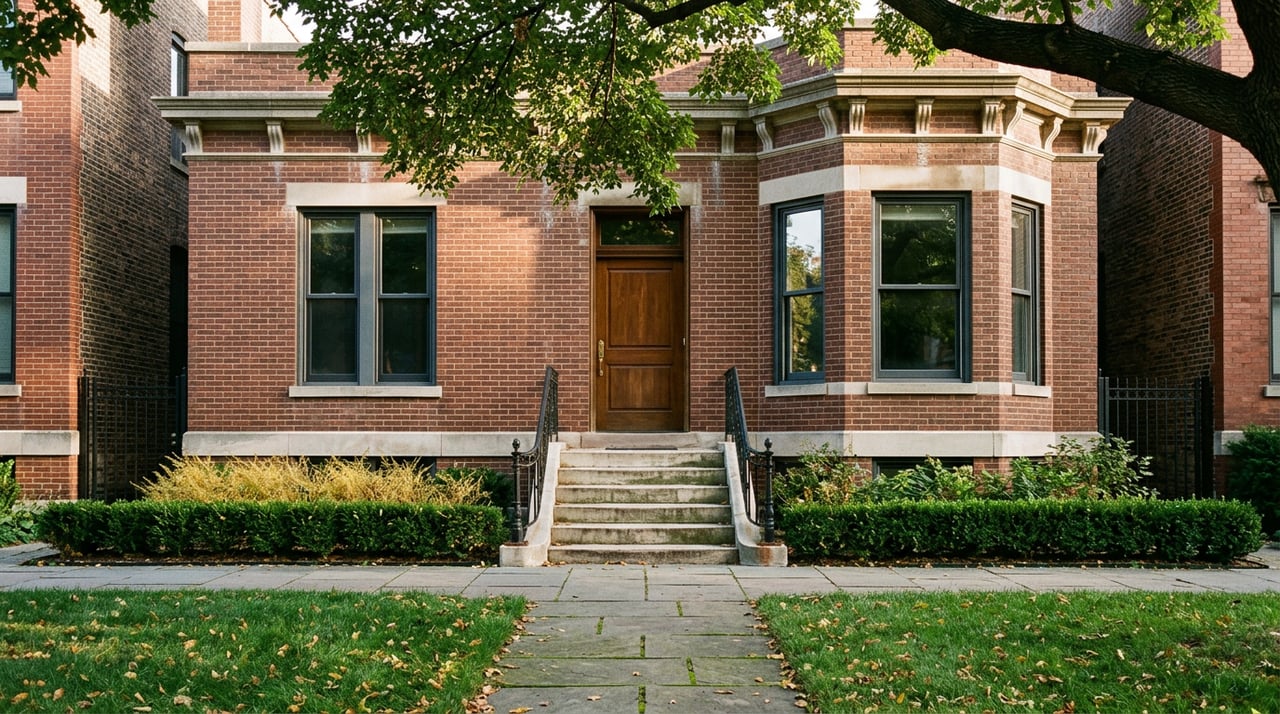
Our clients owned a 1928 greystone 3-flat on the border of Avondale and Logan Square. The property was exactly the kind the ordinance was built around: a classic Chicago multi-unit with long-term tenants in two of the three units and an owner looking to sell.
The Property
2913 N. Sacramento Ave., Chicago, IL 60618
Legal 3-flat greystone | 8 beds / 5 baths | Built 1928
Avondale / Logan Square border
Sold: May 2025 | $860,000
Listed by Camille Canales & Joe Tighe, Compass Real Estate
At the time of listing, the property had two active tenants — one in the garden unit (Unit 1) and one on the top floor (Unit 3). Unit 2 was vacant. That meant both occupied tenants were entitled to a formal Notice of Intent to Sell and a 30-day window to respond.
What We Did, Step by Step
Step 1: Confirmed coverage. Because the property was in 60618 within the Avondale boundary, it fell under the ordinance. We confirmed this before our clients had set a price.
Step 2: Drafted and delivered the Notice of Intent to Sell. The notice went to both tenants and was submitted to the City of Chicago's Department of Housing (DOH). It included the asking price and all required property information. We also posted physical copies at each building entrance, as required.
Step 3: Started the 30-day clock. From the date of confirmed notice delivery, the waiting period began. During this time, we could market the property but could not accept or execute a contract with an outside buyer without completing the tenant response process.
Step 4: Documented tenant responses. Neither tenant exercised their right to purchase — which is the most common outcome. Once the 30-day period lapsed without a qualifying response from either tenant, we were free to proceed with the open market.
Step 5: Proceeded to contract and closing. With documentation of notice and the expired response period in hand, the transaction moved forward. The property went under contract and closed in 18 days on market.
The Key Takeaway
The ordinance added time to the pre-listing phase — not to the sale itself. By starting the compliance process before the property hit the market, our clients didn't lose a single day of market time after going live. The 30 days happened before we launched, not after.
Four Things Sellers Must Get Right
1. Know your property size category before anything else
The notice periods and tenant response windows are different for 1–2 unit properties, 3–4 unit properties, and 5+ unit buildings. Most Chicago greystone 3-flats fall in the 3–4 unit bucket, but a coach house or basement unit can push you into a different category. Get this right first — everything else flows from it.
2. The Notice of Intent to Sell must be sent before you list
This is the most common error we hear about from sellers who tried to navigate this on their own. The notice is not something you send simultaneously with going live — it must be sent first, and the required waiting period must elapse before you accept a contract. Listing before completing notice delivery puts the entire transaction at legal risk.
3. Delivery method matters
The notice must be delivered in writing and posted at each building entrance. Sending a text to your tenant does not satisfy the requirement. Keep dated proof of delivery — certified mail, a signed acknowledgment, or both. This documentation travels with the deal to closing.
4. Non-compliance follows the sale
Fines run $200–$1,000 per day per offense. More importantly, a title company or buyer's attorney who discovers a missing Notice of Intent to Sell can delay or derail a closing. We've seen deals fall apart because the seller skipped this step early in the process and had no documentation to show at the closing table.
Notice and Response Periods by Property Size
Property Size | Notice Before Listing | Tenant Response Window | Required Tenant Documentation |
|---|---|---|---|
1–2 Units | 15 days | 15 days | Pre-approval letter from lender |
3–4 Units | 30 days | 30 days | Pre-approval letter from lender |
5+ Units | 60 days | 90 days | Letter of intent from financial institution |
Source: City of Chicago Northwest Side Preservation Ordinance. Periods run from confirmed delivery of the Notice of Intent to Sell.
What We See Go Wrong
Listing without completing notice. Sellers assume the notice can happen in parallel with listing. It cannot. The response period must run before you execute a contract with an outside buyer.
Confusing "tenant waiver" with "tenant non-response." A tenant who doesn't respond is not the same as a tenant who signed a waiver. Both result in the same outcome for the seller, but only a signed waiver gives you clean documentation. Always ask tenants to acknowledge receipt of the notice in writing, even informally.
Not telling the buyer's attorney upfront. Every experienced buyer's attorney in these neighborhoods will ask for the Notice of Intent to Sell documentation at some point. Disclosing it at the beginning — not at the closing table — keeps the deal moving.
Assuming vacant units don't count. The ordinance applies based on the occupied status of units at the time of notice, not the number of units in the building. A building with three units, one of which is vacant, has two tenants who need to receive formal notice.
Frequently Asked Questions
Can I start marketing while the waiting period runs?
Yes. You can market the property, hold open houses, and collect interest during the notice period. What you cannot do is accept or execute a purchase contract with an outside buyer until the tenant response window has closed without a qualifying offer from a tenant.
What if a tenant says they want to buy but can't get financing?
The tenant must provide a pre-approval letter from a lender (for 1–4 unit buildings) or a letter of intent from a financial institution (for 5+ units) to formally exercise the right. Verbal interest alone does not constitute a qualifying exercise of the right to purchase. If a tenant expresses interest but cannot produce the required documentation within the response window, the seller may proceed with the open market.
Does the ordinance apply if there are no tenants?
If the property is fully vacant at the time you initiate the sale, there are no tenants to notify and no waiting period applies in the same way. However, we recommend confirming this with your real estate attorney before proceeding, as the interpretation can depend on lease status and timing.
Does a tenant's right of first refusal mean they can match any offer?
Tenants have the right to purchase at the listed asking price — not at a price negotiated by a third-party buyer. If you accept a buyer's offer below your asking price, tenants may have the right to purchase at that lower price. Consult with your attorney on how price reductions interact with the ordinance in your specific situation.
What happens if I need to change my asking price?
Significant price changes may require a new notice and restart the response period. This is one reason it's critical to work with an agent who understands the ordinance — pricing strategy under 606 TOPA is different from a standard listing.
Selling a Multi-Unit in the 606 District?
We've done this. We know the paperwork, the timing, and how to keep your sale on track without surprises. Let's talk before you list.
The information in this post is for general educational purposes and reflects the authors' experience with the Northwest Side Preservation Ordinance as of publication. It does not constitute legal advice. Consult a licensed real estate attorney for guidance specific to your transaction.