Most sellers come to us with a rough timeline in mind. They know Chicago real estate moves quickly. They've heard stories of 2-flats going under contract in a weekend. They're ready to list and ready to close.
Then we tell them: before we can put your rental property on the market, there's a legal process we have to complete first. It takes 30 to 60 days. And it has nothing to do with repairs, staging, or pricing.
It's called the Northwest Side Preservation Ordinance — also known as 606 TOPA (the Tenant Opportunity to Purchase Act) — and if your property is in Logan Square, Avondale, Hermosa, Humboldt Park, or West Town, it applies to you. Every time. Without exception.
This post explains what the ordinance is, why it exists, and — most importantly — how to plan around it so it doesn't add a single day of delay to your active time on market.
Our Full 606 TOPA Resource Series
Overview: What Home Buyers and Sellers Need to Know
The Ordinance in Plain English
Chicago passed the Northwest Side Preservation Ordinance in 2022 to slow displacement in neighborhoods where rising property values were pushing out long-term renters. The mechanism: if you want to sell a rental property in the covered area, you have to give your tenants a formal heads-up — and a window to buy it themselves — before any outside buyer can step in.
The notice you send isn't a courtesy. It's a legal requirement, filed with the City of Chicago's Department of Housing, posted physically at your building's entrance, and delivered in writing to every tenant with a documented delivery date. The tenant response window — during which they can submit a pre-approval letter and formally exercise their right to purchase — runs for 15, 30, or 90 days depending on the size of your building.
Only after that window closes — without a qualifying tenant offer — can you execute a purchase contract with an outside buyer.
30 Days Most Common Wait Required for 3–4 unit buildings before listing or accepting a contract | 0 Days Lost Market Time When you start compliance before launching — which is exactly what we do | $1,000/Day Maximum Fine Per offense for sellers who skip the process or do it wrong |
Why This Catches Sellers Off Guard
The ordinance isn't widely advertised, and it doesn't come up in casual conversation until you're already thinking about selling. Most sellers in the covered area have never heard of it before sitting down with an agent. A few have heard the name but assume it doesn't apply to their specific property. Some have sold properties in other Chicago neighborhoods and assume the same process applies here. It doesn't.
The result is that sellers who don't know about the ordinance often plan to list on a timeline that simply isn't possible. They're ready to go in two weeks. The ordinance requires at least 30 days — often more — before a contract with an outside buyer can close.
This isn't a reason not to sell. It's a reason to start the conversation earlier.
What a Realistic Selling Timeline Looks Like
Here's how we approach the timeline for a typical 3–4 unit property in the covered area:
Phase | What Happens | Typical Duration |
|---|---|---|
Pre-Listing Prep | Pricing strategy, property prep, photography, attorney drafts Notice of Intent to Sell | 1–2 weeks |
Notice Delivery + Compliance Window | Notice delivered to tenants and DOH; 30-day response window runs; property may be marketed but no contract executed | 30 days |
Active Marketing + Offer Period | MLS launch, showings, offers; go under contract with outside buyer | 1–4 weeks |
Attorney Review + Due Diligence | 5-day attorney review, inspection contingency, mortgage contingency | 3–5 weeks |
Closing | Final walkthrough, closing day | 1 day |
From decision to close, most sellers in the covered area should plan for 10–14 weeks minimum. Sellers who call us two weeks before they want to close are not in a position to close in two weeks — and any agent who tells them otherwise isn't being straight with them.
The good news: When you start the compliance process before going on the market — which is our standard approach — the 30-day window runs in the background while we're doing photography, prepping the listing, and building buyer interest. By the time we launch on the MLS, the window is closed and you're ready to accept contracts immediately. It doesn't slow your sale. It just requires starting sooner.
Does the Ordinance Apply to Your Property?
The ordinance applies to rental properties within the defined Northwest Side boundary. The covered neighborhoods are Logan Square, Avondale, Hermosa, Humboldt Park, and West Town — five of Chicago's most active markets for 2-flats, 3-flats, and small apartment buildings.
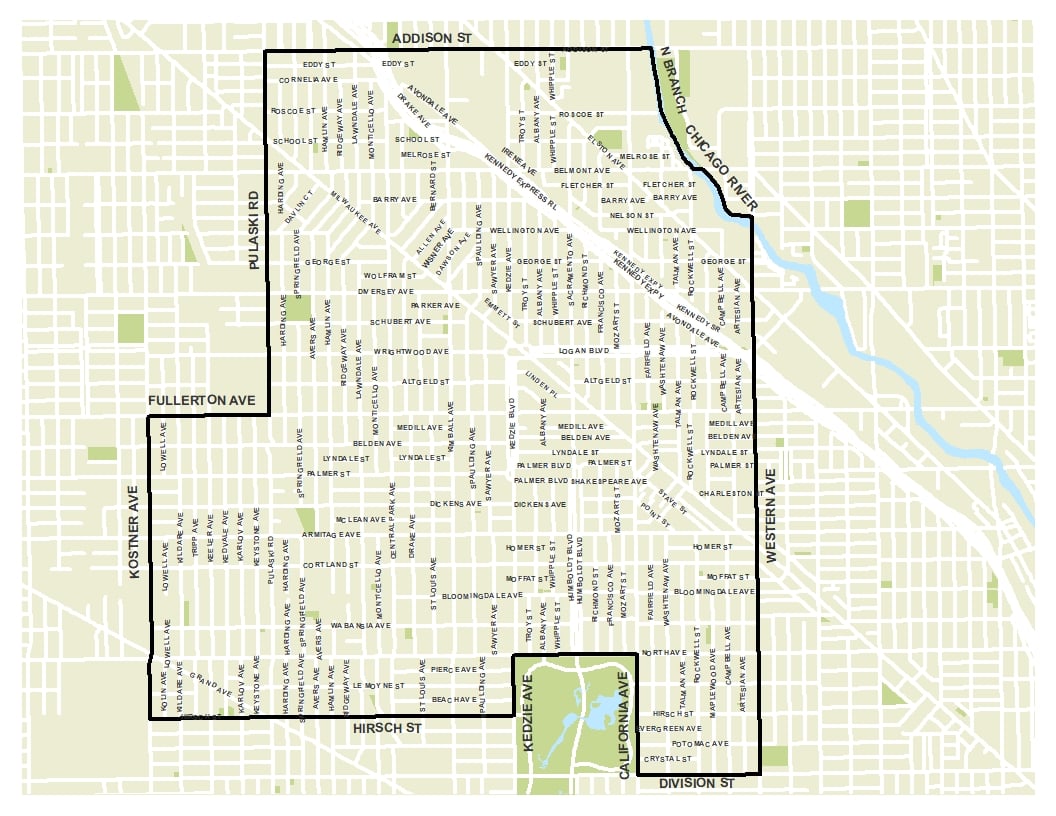
Properties just outside the boundary — certain parts of Irving Park, Pilsen, Wicker Park — may not be covered. If you're unsure whether your address falls inside the zone, reach out and we'll give you a quick answer.
Required Notice Periods by Property Size
Property Size | Notice Before Listing | Tenant Response Window |
|---|---|---|
1–2 Occupied Units | 15 days | 15 days |
3–4 Occupied Units | 30 days | 30 days |
5+ Occupied Units | 60 days | 90 days |
Questions We Hear Most Often
What if my tenant is month-to-month? Do they still count?
Yes. Month-to-month tenants are still tenants under the ordinance and must receive the formal Notice of Intent to Sell. The tenant's lease structure affects their housing situation, not their rights under this ordinance.
What if I tell my tenant I'm planning to sell before starting the formal process?
A verbal heads-up does not satisfy the notice requirement. The formal notice must be in writing, delivered with documented confirmation, filed with the City's Department of Housing, and posted at building entrances. The response clock doesn't start until formal delivery is confirmed.
Can I ask my tenant to waive their right to purchase to speed things up?
A tenant can provide a written declination of their right to purchase, which effectively closes their response window early. However, this has to be genuinely voluntary on the tenant's part — any attempt to pressure a tenant into waiving their right could create legal exposure. Many tenants do sign declinations quickly once they've confirmed they don't intend to buy, which can shorten the pre-listing phase considerably.
Do I need a lawyer for this?
Illinois real estate transactions involve attorneys by default — this is not an optional-attorney state. Given the formal notice requirements and documentation standards under the ordinance, your attorney should draft or review the Notice of Intent to Sell and confirm that your compliance documentation is complete before you go under contract. We coordinate closely with seller's attorneys on this process.
What if my tenant is behind on rent — does that change anything?
Rent delinquency doesn't exempt the tenant from their rights under the ordinance, and it doesn't exempt you from the notice requirement. If you're also managing a rent collection issue alongside a sale, that's a conversation to have with your attorney early, since it can affect both the compliance process and your closing timeline.
How We Handle This for Our Sellers
When a seller in the covered area comes to us, the first conversation isn't about list price or staging. It's about the compliance calendar. We want to know: how many occupied units are there, when do you want to be on market, and do you have an attorney lined up?
From there, we work backward. The 30-day notice period (for most 3–4 unit properties) runs simultaneously with our pre-listing preparation — photography, pricing, building the listing. By the time the property goes live on the MLS, the tenant window is closed and we're free to accept contracts. Buyers see a clean, ready-to-close property. There's no asterisk on the listing.
We did this most recently at 2913 N. Sacramento Avenue — a 3-flat greystone on the Avondale/Logan Square border with two active tenants. We started compliance before photography. Both tenants received formal notice. The window lapsed without a qualifying purchase offer. The property launched, went under contract in 18 days, and closed at $860,000 in May 2025. The ordinance didn't slow the sale. It just required starting 30 days earlier.
Thinking About Selling a Rental Property on the Northwest Side?
Start the conversation before you're ready to list — that's the move that keeps your timeline on track. We'll walk you through exactly what the compliance process looks like for your specific property.
The information in this post is for general educational purposes and reflects the authors' experience with the Northwest Side Preservation Ordinance as of publication. It does not constitute legal advice. Consult a licensed Illinois real estate attorney for guidance specific to your transaction.