If you've been thinking about leaving New York City for Chicago, you're not alone — and you're not crazy. It's one of the most common relocations we see at CCG Chicago, and it's one that our own agent Bridget Smith knows firsthand. She made the move from New York City in 2011 with her husband, looking for a place to put down real roots. Fourteen years later, she's never looked back.
This post is for anyone who's seriously weighing the NYC-to-Chicago leap: what actually changes, what doesn't, what surprises people, and what to know before you start your home search.
The Big Stuff That Actually Changes
Space. This is always the first thing New Yorkers mention. In Chicago, your dollar goes substantially further in terms of square footage — and that's not just a talking point. Clients who relocated from the DC area recently and purchased a condo in River North told us that the space-to-price ratio was one of the biggest factors in their decision to buy rather than rent. When you can actually afford to own something with room to breathe, the calculus shifts quickly.
The pace. Chicago moves differently than New York. That doesn't mean it's slow — walk through the Loop on a Tuesday morning or Wicker Park on a Saturday night and you'll feel the energy. But there's a particular New York relentlessness that Chicago simply doesn't have, and most people who make the move say it's one of the things they appreciate most. Bridget describes it as Chicago feeling like a city where you can actually live, not just survive.
The lakefront. This one genuinely catches New Yorkers off guard. Lake Michigan isn't background scenery — it's a central part of daily life for most Chicagoans. The 18-mile lakefront trail, the beaches, the way the skyline looks from the water — it becomes part of your routine in a way that the New York waterfront never quite does for most residents. Bridget can often be found walking or biking the 312 Riverwalk when she's not working. That kind of access to nature and movement, woven into a dense urban environment, is something Chicago does uniquely well.
What Doesn't Change (That You Might Expect To)
You'll still be in a world-class food city. Chicago's restaurant scene is deep, diverse, and genuinely excellent — not a consolation prize for leaving New York. You'll still have access to incredible architecture, museums, music, and theater. You'll still find dense, walkable neighborhoods where you can live your entire life within a few blocks if you want to. And you'll still find an enormous range of people from everywhere in the world — Chicago's diversity is one of the things CCG founder Camille Canales, who relocated from Austin in 2004, says she loves most about the city.
The neighborhood energy is real. One of the things New Yorkers sometimes worry about is whether Chicago will feel less alive. What they find instead is that Chicago's neighborhoods each have their own distinct identity in a way that's actually more pronounced than many parts of New York. Wicker Park has a different feel from Lincoln Park, which feels nothing like Logan Square, which feels entirely different from Bucktown. Camille often describes it as feeling like a collection of small cities within one larger one. For buyers, this means finding the right neighborhood matters enormously — and it's one of the most enjoyable parts of the search.
The Neighborhoods New Yorkers Tend to Land In
Every relocation buyer is different, but there are patterns. Here's where we most often see NYC transplants end up and why.
Lincoln Park is probably the most recognizable Chicago neighborhood for out-of-towners, and for good reason — it's the neighborhood that feels most quintessentially Chicago. You have the park and the lakefront right there, some of the most beautiful greystone and brownstone architecture in the city (much of it originally built in the late 19th century), excellent schools, restaurants, and retail on Armitage and Clark, and a strong sense of neighborhood community. It's also one of the stronger long-term investments in the city. For buyers coming from neighborhoods like the Upper West Side or Brooklyn Heights, Lincoln Park often clicks immediately.
River North appeals to buyers who want to stay close to the energy of downtown — walkable to Michigan Avenue, the Riverwalk, great restaurants, easy commute. The condo market here is strong, and for someone who isn't ready to leave that high-density, amenity-rich lifestyle, it's a natural fit.
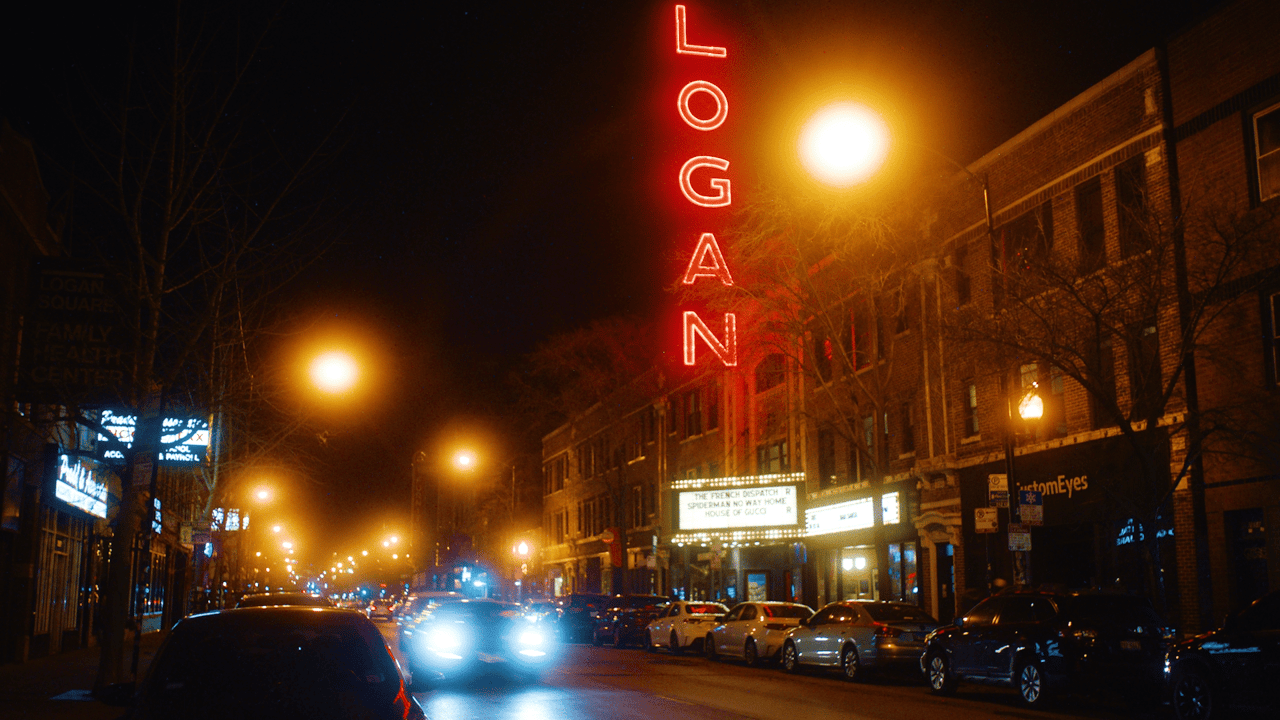
Wicker Park and Bucktown are where you'll find buyers who want the creative, neighborhood-driven energy of somewhere like Williamsburg or the East Village. Independent restaurants, boutiques, live music venues, the 606 trail connecting the two neighborhoods — it's a compelling combination. Logan Square, just west of Bucktown, has seen significant investment and appreciation over the past decade and tends to attract buyers with an eye for value and a longer time horizon.
If you're open to something a little different, East Avondale — where Bridget and her family now live — has become one of the city's genuinely exciting neighborhoods, with a strong community feel and more space than you'd typically find closer to the city center.
The Honest Part: What New Yorkers Sometimes Struggle With
The winter. It's real. Chicago winters are genuinely cold, and the wind makes them feel colder. That said, the city doesn't shut down — Chicagoans are deeply practiced at living full lives year-round, and the neighborhoods stay active even in January. You adapt, you invest in a real coat, and by spring you'll feel like a local. But we'd be doing you a disservice if we didn't mention it.
Driving. Depending on where you land, Chicago may ask more of you car-wise than Manhattan did. Many neighborhoods — Lincoln Park, River North, Wicker Park — are quite walkable and well-served by the L train. But Chicago is also a city where having a car opens things up considerably, and if you're coming from a lifestyle where you haven't driven in years, that's worth thinking about before you choose a neighborhood.
The winters again. Genuinely, the winter. You've been warned twice now.
If You're Relocating to Buy, Here's What We've Learned
At CCG Chicago, a significant portion of our clients are relocation buyers — people navigating a purchase in a city they don't yet know well. The process is manageable, but it requires a specific kind of guidance. Camille and her team have helped buyers close remotely, make competitive offers without being in town, and find the right neighborhood match through deep, patient conversations about how they actually want to live.
One thing we always tell relocation buyers: resist the urge to anchor too quickly on a specific neighborhood based on what you've read or heard. Chicago is a city that rewards actually walking it, and even a short visit to explore two or three neighborhoods in person can completely change where you think you want to be.
Bridget made her move to Chicago without knowing exactly what she was getting into — and she'll tell you it became not just her home, but her passion. That's the Chicago story we hear over and over again.
If you're thinking about making the move from New York, we'd love to talk. Reach out to the CCG Chicago team and let's start the conversation.