If South Loop loft living has caught your eye, you are not alone. These homes offer character, volume, and a very different feel from a standard condo, but two lofts that look similar online can live very differently in real life. If you are thinking about buying in South Loop, it helps to know what sets these buildings apart, what tradeoffs to test in person, and which building details matter just as much as the finishes. Let’s dive in.
Why South Loop lofts stand out
South Loop has deep roots as one of Chicago’s earliest residential areas, but much of its loft inventory grew out of the neighborhood’s industrial and railroad past. For many years, the area around Dearborn Station became a major printing district, and many of the buildings that define loft living today started as workspaces rather than homes.
That history still shapes the buying experience now. In the Printing House Row District, buildings constructed between 1883 and 1928 were later preserved as part of a Chicago Landmark district designated in 1996. Because these buildings were designed for printing and related uses, features like long floor plates and strong natural light still influence how units feel today.
For you as a buyer, that means building age and conversion history matter. Two South Loop lofts may have similar square footage, bedroom counts, or asking prices, but the quality of the original structure and the way the conversion was handled can create very different day-to-day living experiences.
What defines loft living
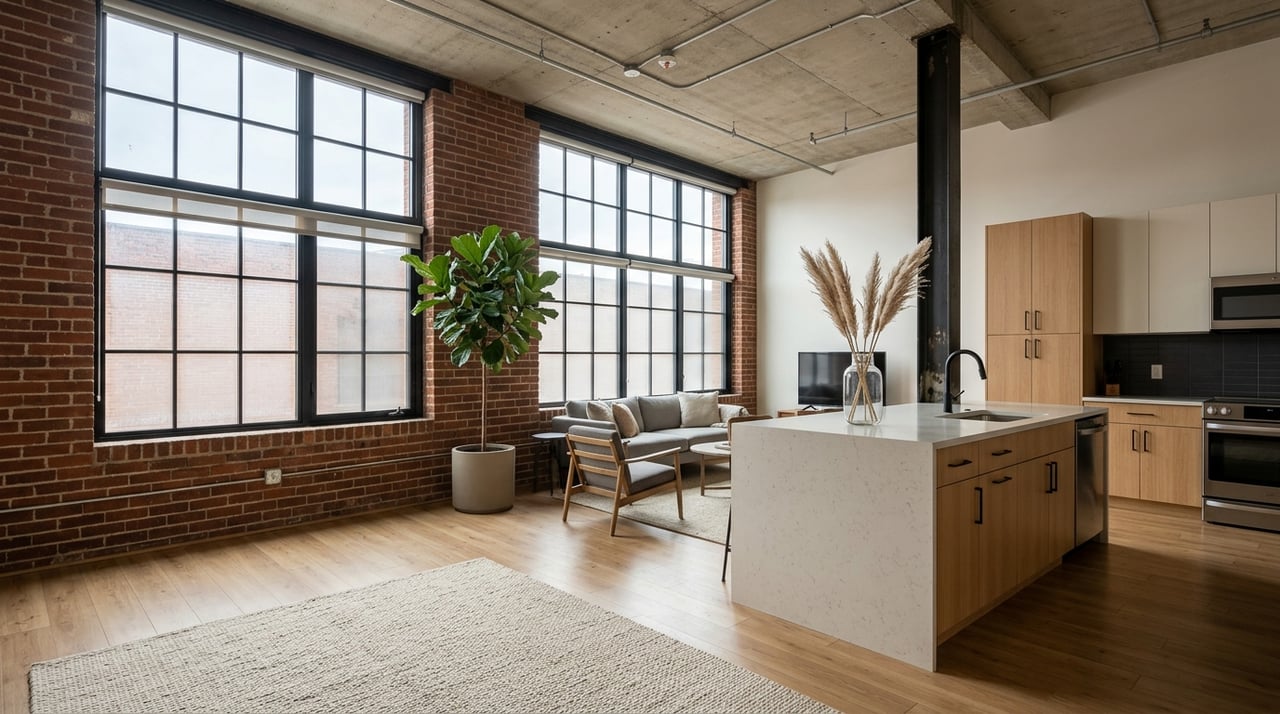
A loft usually feels more open and flexible than a traditional condo. In Chicago loft conversions, you will often see higher ceilings, oversized windows, and broad open living areas that can make the space feel larger than the numbers suggest.
That openness is a big part of the appeal. A single space may work for relaxing, entertaining, working from home, and dining without feeling boxed in. If you like homes with character and room to adapt around your lifestyle, a loft can be a strong fit.
At the same time, open layouts can create tradeoffs. With fewer interior walls, privacy, acoustics, and storage can vary a lot from one unit to the next. That is why loft shopping in South Loop is rarely just about finishes or style. It is about how the space functions for your daily routine.
What to test during showings
When you tour South Loop lofts, it is smart to look past the exposed brick, high ceilings, and dramatic windows for a few minutes. The most important questions often come down to how comfortable and practical the home will feel once you move in.
Check light and layout
South Loop’s historic loft buildings were originally designed to bring in as much light as possible. That can be a major advantage, but not every unit gets the same result.
Pay attention to where the windows sit, how deep the unit runs, and whether the light reaches the areas where you will spend the most time. A bright main living space can feel amazing, but it is worth checking whether bedrooms, work areas, or interior corners feel darker than you expected.
Listen for noise
Because lofts often have open plans and fewer partitions, sound can travel differently than in a more traditional condo. During a showing, pause and listen instead of filling every quiet moment with conversation.
If possible, visit at different times of day. Ask where major mechanical systems are located and think about the placement of bedrooms in relation to hallways, elevators, trash rooms, or busier streets. Noise is not always obvious in listing photos, but it can have a big impact on how a home feels over time.
Look closely at storage
Storage is one of the biggest details buyers overlook in lofts. Open space looks great, but fewer built-in closets or separated utility areas can make everyday organization harder.
Compare closet space carefully and ask whether the unit comes with a separate storage cage. You should also confirm whether that storage is deeded, assigned, or waitlisted. A beautiful loft can feel much smaller if your practical storage needs are not covered.
Clarify parking and extras
Parking, bike storage, laundry, and shared amenities can vary widely from one South Loop loft building to another. Some rehab buildings include features like rooftop decks or fitness centers, while others offer a more limited amenity package.
Instead of assuming, ask what is included and what is separate. A unit with slightly higher monthly dues may still deliver better value if it includes features you will actually use.
Why the building matters as much as the unit
In South Loop, loft buying is very much a building-by-building process. The shell of the building, the quality of the conversion, and the association’s financial position can all affect your ownership experience.
This is especially important in older conversions. A lower list price or lower monthly dues can look attractive at first, but those numbers do not always tell the full story. If a building has thin reserves or major future repairs ahead, your long-term costs may end up being higher.
Review reserves and capital plans
Illinois law requires condo association budgets to provide for reasonable reserves for capital expenditures and deferred maintenance. Boards are required to consider repair and replacement costs, useful life of structural and mechanical components, the financial impact on owners, market value, and even the ability to obtain financing or refinancing.
That makes reserve planning more than a bookkeeping detail. It can affect the stability of the building and your future expenses as an owner. Before you buy, review the budget, reserve balance, and any planned capital projects as closely as you review the kitchen or bathrooms.
If reserves have been waived, Illinois requires that waiver to be disclosed in bold in the resale disclosure response. That is an important signal to look at carefully, especially in an older loft building where systems and shared components may require more ongoing planning.
Understand dues, insurance, and monthly cost
Association dues are usually separate from your mortgage payment, so they should be treated as part of your true monthly housing cost. In a South Loop loft, your total cost of ownership may include mortgage principal and interest, property taxes, insurance, HOA dues, and any future special assessments.
Insurance also works in layers. Association dues commonly help cover the building’s master policy for common areas, but you still need your own policy for the unit. In older industrial conversions, insurance costs can vary based on building condition, roof, electrical systems, year built, and related property characteristics.
For many buyers, this is where the math becomes clearer. A loft with a lower purchase price is not automatically the better deal if dues are high, reserves are weak, or future repairs seem likely.
Know the resale disclosure process
Illinois requires substantial condo disclosure information before resale. The resale packet can include the declaration, bylaws, rules, liens, anticipated capital expenditures, reserve status, financial condition, pending suits or judgments, insurance information, and whether prior unit alterations are believed to comply.
The association generally must provide this information within 10 business days of a written request. The law also allows a fee capped at $375, adjusted by CPI, plus an optional $100 rush fee.
For you, this means due diligence is not optional. These documents can reveal whether a building is well run, financially steady, and aligned with how you plan to use the property.
Financing can depend on the building
One of the biggest surprises for condo buyers is that financing is not only about your personal qualifications. In many cases, the building itself must also meet loan standards.
Conventional and FHA financing may depend on project eligibility, insurance, financial condition, title issues, litigation, physical condition, and building policies. Illinois law also says an association cannot disapprove a sale simply because the buyer is using FHA-guaranteed financing.
Rental rules also deserve an early review. Buildings that operate more like hotels or allow daily short-term rentals may be ineligible for certain conventional financing programs. If you already know the loan type you want to use, check building compatibility early so you do not waste time on a property that may not fit.
A smart way to compare South Loop lofts
If you are serious about buying a loft in South Loop, it helps to compare homes with a simple framework instead of focusing only on photos or price per square foot.
Here are a few of the most useful questions to ask:
- Which unit stack offers the best light and the least noise?
- How much usable storage comes with the unit?
- Is storage deeded, assigned, or waitlisted?
- Are parking, bike storage, or laundry included?
- What do the budget and reserve balance show?
- Are there planned capital projects or a history of special assessments?
- Are there rental, pet, or renovation rules that affect how you plan to use the home?
- Will the building work with your intended loan type?
That kind of comparison gives you a clearer picture of value. It also helps you avoid falling for a loft’s visual appeal without understanding the full ownership picture.
South Loop lofts reward careful buyers
South Loop lofts can offer a compelling mix of history, light, flexibility, and urban character. They can also ask more from buyers in terms of due diligence, because the details behind the walls and within the association often matter just as much as the design features you notice first.
If you approach the search with the right questions, you can separate a beautiful listing from a truly smart purchase. The goal is not just to find a loft that looks good online. It is to find one that supports your budget, your lifestyle, and your plans for the years ahead.
If you want help comparing South Loop lofts building by building, Camille Canales can help you evaluate the details that matter before you make an offer.
FAQs
What makes South Loop lofts different from standard condos?
- South Loop lofts often feature higher ceilings, oversized windows, and open floor plans, while standard condos usually have more defined rooms and a more conventional layout.
What should buyers check during a South Loop loft showing?
- You should pay close attention to natural light, noise, bedroom placement, closet space, separate storage, parking, and where building mechanicals are located.
Why do condo reserves matter in a South Loop loft building?
- Reserve levels can affect future special assessments, building maintenance, and the overall financial stability of the association, which is especially important in older conversions.
Are HOA dues included in a South Loop loft mortgage payment?
- Usually not, so you should treat HOA dues as a separate part of your monthly housing cost.
Can financing be harder for a South Loop loft condo?
- Yes, because lenders may review the building’s eligibility, financial condition, insurance, rules, and physical condition in addition to your personal loan qualifications.
What documents should buyers review before buying a South Loop loft?
- Buyers should review the resale disclosure packet, including the budget, reserve information, rules, bylaws, insurance details, anticipated capital expenditures, and any pending legal or financial issues in the association.