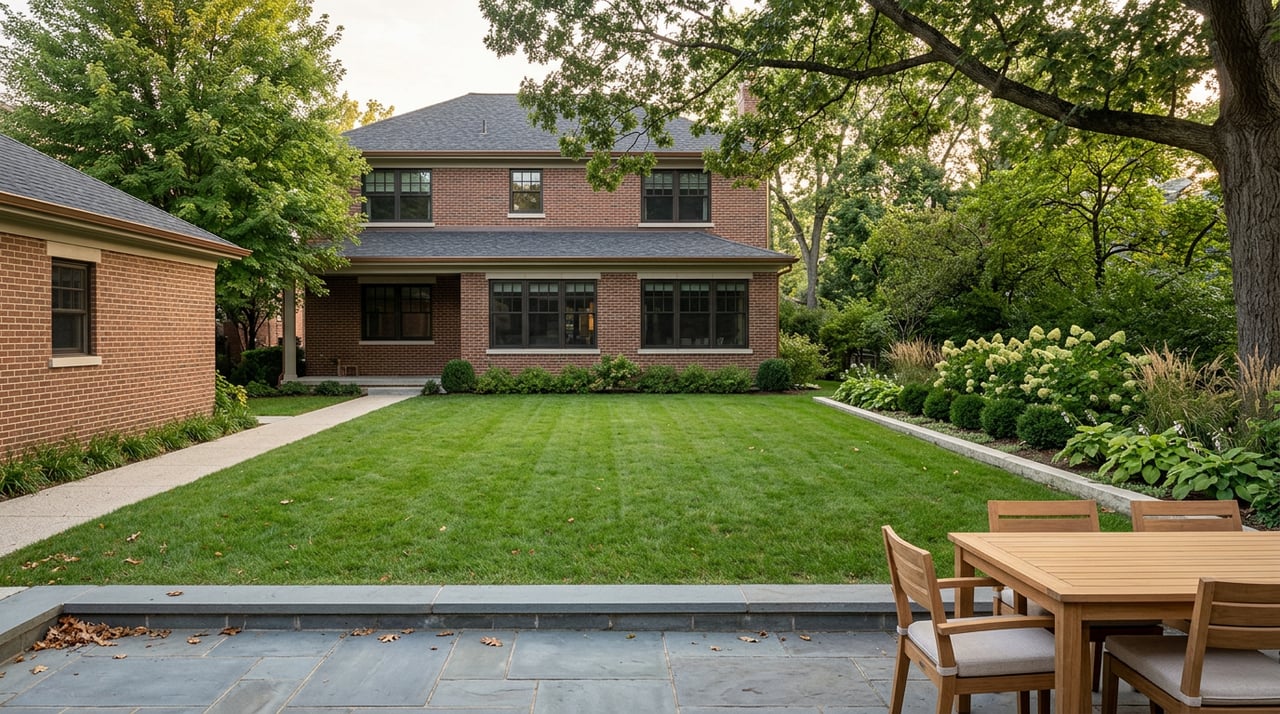
Craving more elbow room without giving up a quick commute and vibrant community? If you are weighing River Forest against Oak Park, you are not alone. Both are beloved inner-ring suburbs with strong identities, but they offer different paths to “more space,” from lot size and yard potential to interior square footage. In this guide, you will get a clear, side-by-side look at how each village stacks up for space, plus quick notes on schools, transit, and how to think about price so your budget goes further. Let’s dive in.
Space at a glance
River Forest generally delivers larger lots and a higher share of sizable single-family homes. That pattern comes from decades of zoning that favored single-family districts and larger parcels. Oak Park, by contrast, offers a broader mix of housing types and densities, including bungalows, two-flats, condos, and some large single-family homes near parks and quieter blocks.
If your top priority is a private yard and room to expand, River Forest often has the edge. If you want housing variety and more all-day rapid transit options, Oak Park tends to deliver that mix while still offering single-family choices in many areas.
Lot size and yard potential
Zoning shapes yard size
River Forest’s planning history helps explain its larger yards. Village materials describe minimum lot-area requirements in single-family districts, including an R-2 district minimum of 8,712 square feet, roughly 0.20 acre. Those standards, applied across many blocks, contribute to bigger private lots in several neighborhoods. You can see these references in the village’s board packet on planning and zoning changes. Village board materials outlining zoning and lot-area standards provide useful context.
Oak Park, built with a more varied pattern of lots and building types, includes many classic bungalow blocks, two-flats, and multi-unit buildings closer to downtown. That mix can translate to smaller footprints on many blocks and a denser, more walkable environment overall. You will still find pockets with larger lots, but the median yard experience is often more compact than many River Forest streets.
What bigger lots allow
When lot area increases, so does your flexibility. Larger parcels often mean more private lawn and play space, plus more straightforward room for additions, detached garages, expanded patios, and thoughtful landscape projects. In both villages, always check local setback, lot coverage, and historic-preservation guidelines before planning a major expansion. River Forest’s planning materials are a good starting point to understand how setbacks and lot coverage may apply on a given block. Review the village’s planning and zoning references before you set your renovation scope.
Typical interior square footage
River Forest: larger single-family homes
Active and recent sales in River Forest frequently include single-family homes in the 2,000 to 3,500 plus square foot range, with some historic estates beyond that on special lots. Many of these homes come from early 20th-century building waves that produced substantial Prairie, Tudor, and larger Craftsman designs. If you are trading up from a smaller city home or condo, you will often see a step change in interior space alongside lot size.
Oak Park: wide variety by block
Oak Park offers the broadest range. You will find classic bungalows and modest single-family homes around 800 to 1,800 square feet, plus townhouses and condos for lower-maintenance living. On several streets near parks or in quieter pockets, you will also find single-family homes in the 2,000 to 3,500 plus square foot range. Because the mix is wide, it pays to narrow by block and housing type to understand what “more space” looks like for your budget and preferences.
Architectural styles and how they live
River Forest character
River Forest is known for notable Prairie School, Tudor, and substantial Craftsman homes, with larger footprints and deeper lots common in several neighborhoods. The village’s historic preservation materials highlight the significance of these periods and styles. If you love period architecture with presence, explore the Historic Preservation Commission packet for context as you tour homes.
Oak Park’s renowned architecture
Oak Park is home to a world-famous concentration of Frank Lloyd Wright and Prairie School buildings, alongside early 1900s bungalows and two-flats. That variety supports different lifestyles. Bungalows offer efficient footprints and manageable yard space. Two-flats and condos trade yard size for lower exterior maintenance. To learn more about the area’s architectural legacy, see the Frank Lloyd Wright Trust.
Commute and transit
Both villages have strong rail access. River Forest and Oak Park are served by Metra’s Union Pacific West line, which connects to the Loop and western suburbs. You can review schedules and station details on the UP-West line page. Oak Park also has the CTA Green Line, with the Harlem/Lake station acting as a terminus for all-day rapid transit into the city. For train times and frequency, check the CTA Green Line Harlem/Lake timetable.
Commute profiles are similar between the villages. Census QuickFacts show mean travel times to work around 31 to 32 minutes for workers 16 and older, which suggests comparable regional access, with block-by-block variation based on your exact address and mode. See the U.S. Census snapshot for River Forest for reference on commute times. Census QuickFacts can help you compare trends.
Schools overview
Both communities feed Oak Park and River Forest High School, District 200. Elementary schools are organized separately: River Forest is served by River Forest School District 90, and Oak Park is served by Oak Park Elementary District 97. School quality and programming can change, and boundaries are address specific. Use the official district sites as your first stop and verify any individual address with the district directly.
- River Forest elementary: River Forest School District 90
- Oak Park elementary: Oak Park Elementary District 97
- High school for both villages: Oak Park and River Forest High School, D200
Price and where your budget goes further
Recent market snapshots often place both River Forest and Oak Park in a similar band for price per interior square foot, commonly in the low to high $200s depending on the month and the data provider. Median sale prices also shift month to month, and they vary by property type. Because data can fluctuate, the best path is to compare active and recent sales that match your target house type, block, and lot size.
Price per square foot is a useful but incomplete lens for a space-first search. It measures interior area only. If you want yard and long-term flexibility, also look at lot area, lot depth, and site layout. A wider or deeper lot can make additions, patios, and garages more feasible within local setback and lot-coverage rules. For many move-up buyers, comparing price per lot square foot alongside interior price per foot tells a more complete story.
How to compare apples to apples
Use this quick framework to evaluate space and value:
- Clarify priorities. Rank yard size, interior square footage, bedroom count, and travel time.
- Filter by house type. Separate detached single-family homes from townhomes and condos.
- Measure the site. Note lot width, lot depth, and total lot area from public records.
- Check feasibility. Review local rules for setbacks, lot coverage, and preservation before assuming you can add on. Start with River Forest’s planning materials and Oak Park’s published guidelines.
- Compare cost per space. Look at both interior price per square foot and approximate price per lot square foot for a fuller picture.
Which village fits your wish list?
- Choose River Forest if you want larger lots, more private yard space, and a high share of substantial single-family homes in Prairie, Tudor, and Craftsman styles.
- Choose Oak Park if you want a wider range of housing types, more all-day rapid transit options via the CTA Green Line, and walkable blocks near shops and restaurants.
- Consider either if you value short commutes, strong civic amenities, and historic neighborhood character, and you are open to trading some yard for location or vice versa.
Your next step
Space means different things to different households. The smartest move is to see real, recent examples that match your budget and lifestyle. Our team will pull address-specific listings, lot sizes, and block-level context so you can compare River Forest and Oak Park with confidence. Ready to explore a tailored short list and walk a few blocks together? Reach out to Camille Canales to get started.
FAQs
Which village has bigger yards on average?
- River Forest often has larger private lots in many single-family neighborhoods, supported by zoning that set higher minimum lot areas such as 8,712 square feet in R-2. See the village’s zoning references for context.
Is Oak Park better for public transit access?
- Oak Park offers Metra UP-West service plus CTA Green Line access at Harlem/Lake, which adds more all-day rapid transit options into the Loop. See Metra UP-West and the CTA Harlem/Lake timetable.
Will I get more interior square footage for my money in River Forest or Oak Park?
- It depends on inventory, block, and house type; compare interior price per square foot and lot size side by side to see whether a given listing prioritizes yard, interior area, or a balanced mix.
Can I add an addition or build an accessory structure?
- Possibly, but it depends on lot size, setbacks, lot coverage, and any historic-preservation rules; start by reviewing local guidance such as River Forest planning materials and confirm details with the village before you plan.
How are schools organized in River Forest and Oak Park?
- River Forest elementary schools are served by District 90, Oak Park elementary schools are served by District 97, and both feed into Oak Park and River Forest High School, District 200; always verify an address with the district.