Washington D.C. and Chicago have more in common than most people assume before they make the comparison. Both are serious cities — politically engaged, culturally rich, architecturally distinct, built around strong neighborhood identities. Both have excellent transit relative to most American cities. Both attract the kind of person who wants an urban life with real substance to it, not just the aesthetic of one.
That overlap is part of why the DC-to-Chicago move tends to work well, and why the people who make it often describe it less as a trade-off and more as a lateral move into something with a different set of strengths. We helped one such client through this move recently — a buyer who relocated from DC and purchased a condo in River North — and their experience is worth sharing in some detail, because it illustrates something important about what the right relocation support actually looks like.
What DC Buyers Bring to Chicago
DC buyers tend to arrive with a clear sense of what they want from a city. They're used to walkable neighborhoods, functional transit, a strong professional culture, good restaurants, and the kind of civic engagement that comes from living somewhere where policy and politics are part of the air. They know what a real neighborhood feels like and they know the difference between a city that's genuinely livable and one that's simply large.
That baseline makes the Chicago conversation easier in some ways. You're not starting from scratch explaining why neighborhood character matters, or why transit access should factor into your search, or why the difference between two blocks can be meaningful. DC buyers get all of that immediately.
What tends to shift the conversation is Chicago's specific version of those things — the neighborhood structure, the architecture, the lakefront, the value proposition — and those are worth walking through carefully.
The Value Difference
DC's housing market is expensive. Not San Francisco expensive, but expensive in a way that limits what ownership looks like for a lot of buyers, particularly in the neighborhoods closest to the professional core of the city. The comparison to Chicago is meaningful.
In Chicago, the same budget that buys a modest condo in a mid-tier DC neighborhood often accesses something considerably more — more space, more architectural character, a more established neighborhood, better long-term investment fundamentals. The client who anchors this post made exactly that calculation, and the space-to-price ratio was one of the factors they specifically cited in their decision to buy rather than rent after arriving.
Illinois property taxes, as we note in our broader guide to moving to Chicago, are higher than many states and worth understanding before you finalize your affordability picture. But for DC buyers, the overall value comparison still tends to land clearly in Chicago's favor once the full cost structure is laid out honestly.
River North: Why It Made Sense for This Buyer
The client whose experience anchors this post purchased in River North, and there's a clear logic to that choice for someone coming from DC.
River North sits just north of the Loop and west of the Magnificent Mile, which puts it in the middle of Chicago's downtown core. It's walkable to Michigan Avenue, the Chicago Riverwalk, the city's best hotel and restaurant concentration, and multiple L train lines. For a buyer relocating from a city where proximity to the professional center and walkability to amenities are baseline expectations, River North delivers both without compromise.
The condo market in River North is strong and relatively liquid — meaning it tends to hold value well and sell efficiently when the time comes, which matters to buyers who aren't certain how long they'll stay in Chicago before the next chapter. For a relocation buyer who wants the security of ownership without locking themselves into a neighborhood that requires a very long time horizon to make sense, it's a reasonable and well-considered choice.
What River North is not is a neighborhood with the deep residential character of Lincoln Park or the independent creative energy of Wicker Park. It's a downtown neighborhood, which means it has downtown's advantages — density, convenience, access — and downtown's trade-offs, including less of the block-club, know-your-neighbors community culture that defines Chicago's residential neighborhoods further from the core. Whether that trade-off makes sense depends entirely on how the buyer wants to live, which is exactly the kind of conversation that should happen before the property search begins.
The Neighborhoods Worth Knowing for DC Buyers
River North made sense for the buyer in this post, but it's not the only answer for DC transplants. Here are the neighborhoods we'd typically walk through with a buyer coming from Washington.
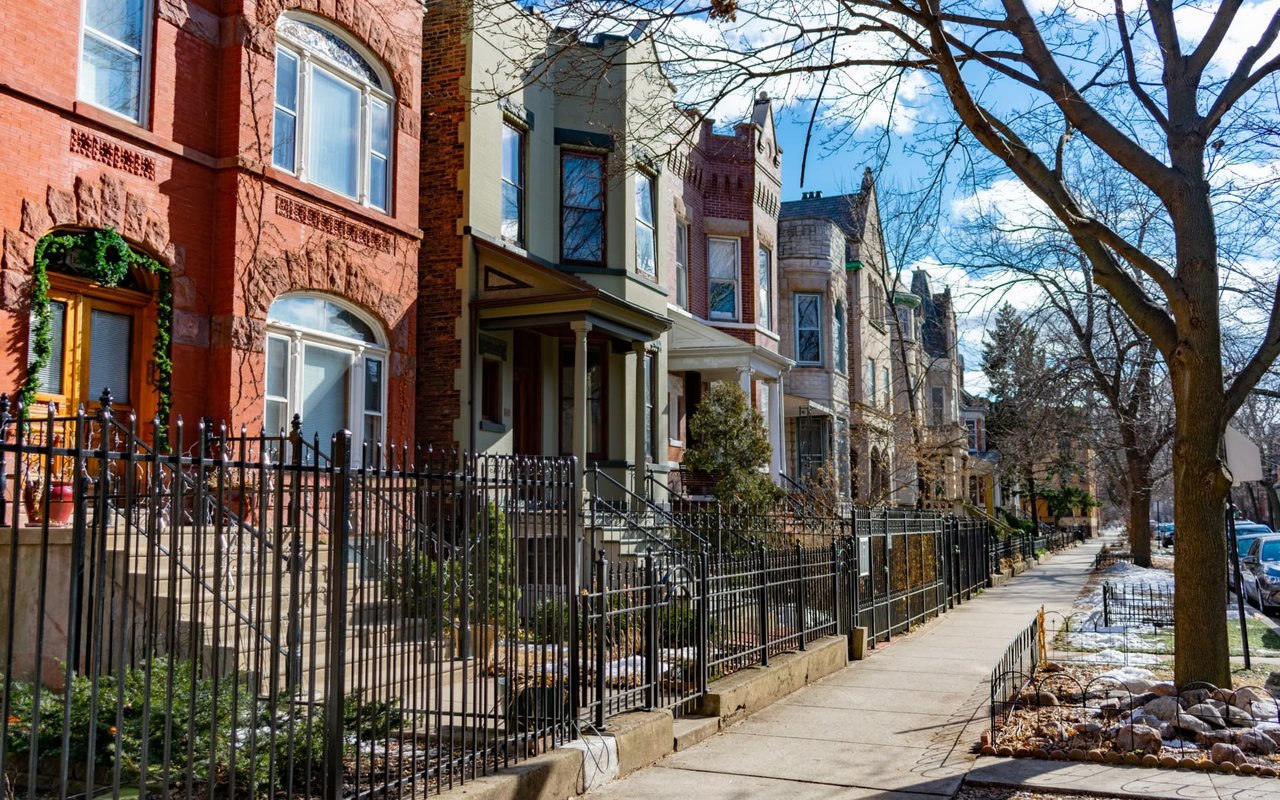
Lincoln Park is the comparison point we return to most often for buyers from established East Coast cities. The architecture — significant amounts of original 19th-century housing stock, greystones and brownstones along tree-lined streets — will feel legible to anyone who's spent time in Georgetown or Capitol Hill. The neighborhood has a complete, self-contained quality: the park and lakefront are right there, the schools are strong, the retail corridors are walkable and genuinely good. CCG Chicago founder Camille Canales, who moved to Chicago from Austin in 2004, considers it the most quintessentially Chicago neighborhood in the city — the one that delivers the full version of what Chicago's residential life looks like at its best.
Lakeview and Wrigleyville sit north of Lincoln Park and offer a slightly more affordable entry point with strong walkability and an active neighborhood social scene. For buyers who want proximity to the lakefront and a dense, residential feel without Lincoln Park's price premium, this corridor is worth serious consideration.
Wicker Park and Bucktown appeal to DC buyers who are drawn to the energy of neighborhoods like Shaw or Columbia Heights — creative, independent, restaurant-forward, with a strong sense of neighborhood identity. The 606 elevated trail connecting the two neighborhoods is a genuine quality-of-life asset, and the vintage housing stock here is some of the most architecturally interesting in the city. CCG Chicago's office is in Wicker Park, and it's a neighborhood we know in particular depth.
Logan Square sits just west of Bucktown and has been one of Chicago's most compelling buys over the past decade. For DC buyers with an investment mindset — or buyers who are open to the multi-unit strategy of buying a two- or three-flat and renting unused units — Logan Square offers the building stock, the neighborhood trajectory, and the price point that makes that approach work well.
What Makes Chicago Different From What DC Buyers Expect
The lakefront, consistently, is the thing. DC has the Mall, Rock Creek Park, the Tidal Basin — genuinely excellent public space. But Lake Michigan is a different kind of asset. The 18-mile lakefront trail, the beaches, the way the skyline looks from the water, the Riverwalk running along the Chicago River through the downtown core — it becomes a part of daily life in a way that takes DC buyers by surprise. Bridget Smith, who moved from New York City to Chicago in 2011 and now lives in East Avondale with her family, counts the lakefront as one of the primary reasons she has never seriously considered leaving.
The neighborhood distinctness. Chicago's neighborhoods are more pronounced in their individual character than DC's, which tends toward a more unified architectural and cultural register across much of the city. In Chicago, moving from Lincoln Park to Logan Square to Pilsen is moving through genuinely different worlds. That makes finding the right neighborhood more important — and more interesting — than it might be in a city with more uniform character.
The winters. We cover this honestly in our full guide to moving to Chicago, and the short version is: they're real, they're manageable, and most people who come from cities with genuine seasons adapt faster than they expect. DC has cold winters by some standards. Chicago has cold winters by any standard. The city is built for it, and spring in Chicago rewards the wait in a way that's hard to describe to someone who hasn't experienced it.
The value. This comes up in every DC-to-Chicago conversation eventually, and it almost always lands the same way: genuine surprise at what the same money buys. The client who moved from DC and purchased in River North specifically noted the space-to-price ratio as a deciding factor in choosing ownership over renting. That reaction is not unusual. Chicago is a city where ownership makes sense for a wider range of buyers than most coastal markets, and for DC buyers who've been watching that window narrow at home, it tends to arrive as real and welcome news.
On the Relocation Process Itself
The client whose experience anchors this post described the CCG Chicago team as bringing warmth, professionalism, and insight that turned what could have been a high-stress experience into an exciting and enjoyable one. They noted specifically that Camille's strategy for presenting an offer went beyond price — it was built around relationships with other agents and insider knowledge of the local market. That's a meaningful distinction in a competitive environment, and it's the kind of thing that matters most when you're a relocation buyer trying to compete with locals who know the market better than you do.
Relocation buyers are navigating two things simultaneously: learning a new city and executing a real estate transaction in it. The best version of that process keeps both tracks moving together — the neighborhood education and the property search informing each other in real time, with an agent who knows which questions to ask about how you want to live before recommending where to look.
If you're in DC and Chicago is on your radar, we'd love to start that conversation. Reach out to CCG Chicago and let's talk through what the move could look like for you.