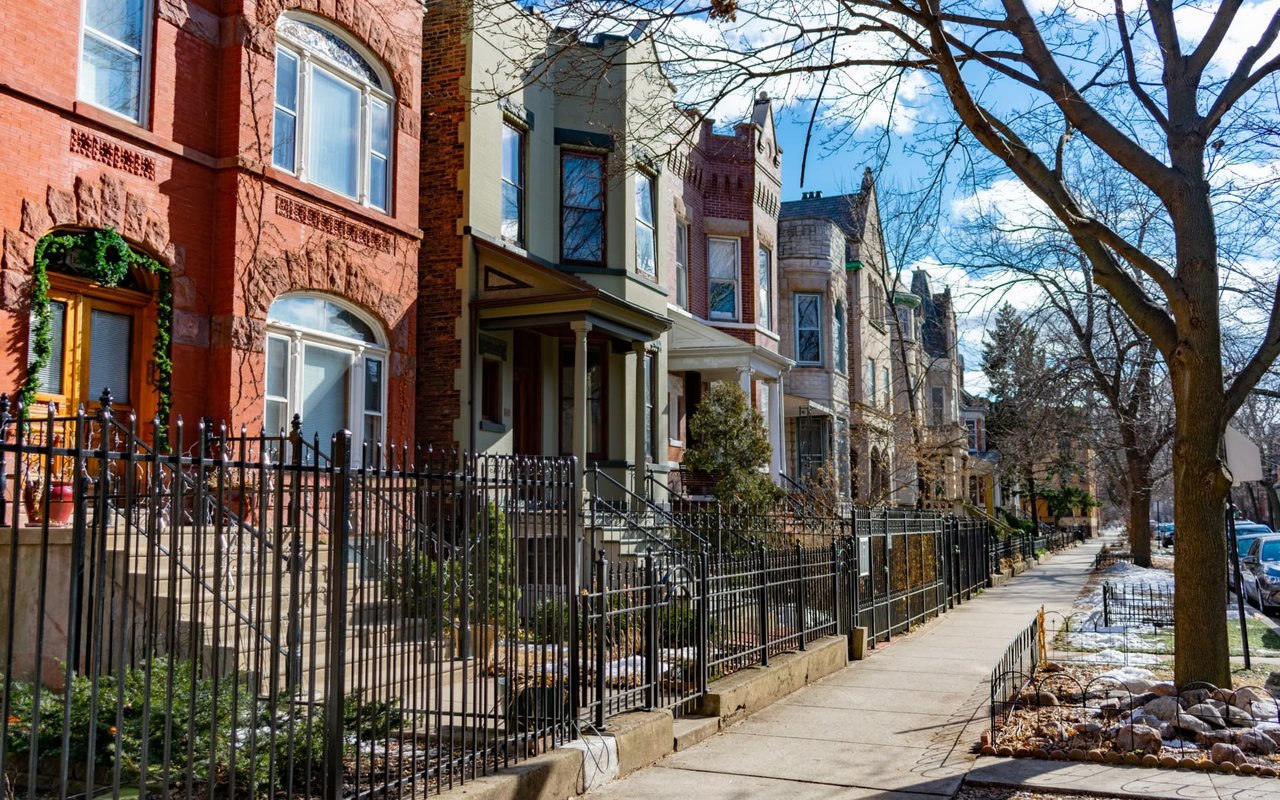
California to Chicago is one of the great underrated relocations in American city life. It doesn't get as much cultural attention as the New York-to-Chicago move, but it happens constantly — and the people who make it tend to be emphatic about it afterward. We've helped multiple clients make this exact move at CCG Chicago, and the pattern in what they tell us is consistent enough to be worth writing down.
This post draws on two of those client experiences directly: one who relocated from California and purchased a multi-unit home in Logan Square, and another who did the same and bought a multi-unit in Lincoln Park. Both bought rather than rented. Both cited Chicago's value proposition as a central factor in that decision. And both described the experience of working through a purchase remotely — in another state, navigating a city they were still getting to know — as something that required a specific kind of guidance to pull off well.
If you're in California and Chicago is on your radar, here's what you should know before you start.
Why California Buyers Are Choosing Chicago
The reasons are different for everyone, but a few themes come up consistently.
Value is the most common one. California's housing market — particularly in the Bay Area, Los Angeles, and San Diego — has put ownership out of reach for a significant portion of buyers who would otherwise be well-qualified. Chicago offers a reset: real square footage, real neighborhoods, real historic housing stock, at price points that make ownership not just possible but genuinely attractive. For buyers who've been renting in California for years while waiting for a window that never quite opens, Chicago can feel like a door that's actually unlocked.
Lifestyle recalibration is the second theme. California has extraordinary things to offer, but it also has a particular pace and set of pressures — traffic, cost, density of a certain kind — that some people reach a point of wanting relief from. Chicago offers a different version of urban life: still genuinely urban, still dense and walkable in the neighborhoods that matter, still a world-class food and culture city, but with a different texture. Bridget Smith, who moved to Chicago from New York in 2011, describes it as a city where you can actually live rather than just survive. California buyers often say something similar.
The investment angle is the third. Chicago's multi-unit building stock — the two-flats and three-flats that define the residential character of neighborhoods like Logan Square, Wicker Park, and Lincoln Park — represents an entry point into real estate investing that simply doesn't exist at comparable price points in California. Buying a two-flat, living in one unit, and renting the other is a strategy with a long track record in Chicago, and it's one that California buyers with an investment mindset tend to respond to immediately.
The Value Question, Specifically
We're going to spend a moment here because it's the thing California buyers most often underestimate until they actually run the numbers.
Chicago's price-per-square-foot in desirable neighborhoods is a fraction of what comparable properties cost in San Francisco, Los Angeles, or even San Diego. That's not a recent development — it's been true for a long time — but it's striking to buyers who have been operating in California's market long enough that those prices feel normal.
What that means practically: buyers who might be looking at a small condo in a less desirable California neighborhood can often access a vintage two-flat in Logan Square or a well-appointed condo in Lincoln Park for the same money, or less. The quality of what you're buying — the architecture, the neighborhood, the long-term investment fundamentals — is often dramatically better.
Illinois property taxes are the honest counterpoint to this, and they're worth understanding early. Property taxes here are higher than California's, and they factor meaningfully into your monthly carrying costs. This doesn't erase the value proposition — it modifies it — and a thorough buyer's agent will walk you through the full cost picture before you make an offer, not after. It's part of the affordability conversation, not a footnote to it.
The net conclusion for most California buyers we've worked with: Chicago represents genuine value, but you need to understand the full cost structure to plan correctly.
The Multi-Unit Strategy: Why Both of Our California Clients Went This Route
It's worth saying plainly: buying a multi-unit property in Chicago is one of the most time-tested paths to building equity in this city, and it tends to click for California buyers faster than almost any other buyer profile.
Here's the basic logic. Chicago's two- and three-flat building stock is abundant in neighborhoods like Logan Square, Bucktown, Ukrainian Village, and parts of Lincoln Park. These buildings were constructed primarily in the late 19th and early 20th centuries, which means you're buying something with architectural character — vintage woodwork, solid construction, proportions that newer buildings don't replicate. You live in one unit and rent the others. The rental income offsets your carrying costs, sometimes significantly. You build equity in a property that tends to hold value well in established neighborhoods. And when you're ready to move on — whether that's into a single-family home or out of Chicago entirely — you have an asset with real appreciation potential.
Both of our California clients chose this path. One purchased in Logan Square, one in Lincoln Park. Both worked with Camille remotely — still living in California during the purchase — and both described the process of navigating inspections, offers, and closing from out of state as something that required an agent who had done it many times before and knew how to keep the process moving without the buyer needing to be physically present for every step.
That remote purchase experience is something CCG Chicago has developed into a particular competency over the years. It requires clear communication, a thorough understanding of what can and can't be assessed from a distance, and an agent who is genuinely acting as the buyer's representative — not just their coordinator.
The Neighborhoods: Where California Buyers Tend to Land
Logan Square is the neighborhood we'd start with for most California buyers, and the client review that anchors this post is a good illustration of why. It has the creative, community-minded energy that buyers from the Bay Area and Los Angeles often respond to — independent restaurants, a strong arts presence, a genuine mix of longtime residents and newer arrivals. The boulevard system that runs through the neighborhood is architecturally beautiful and practically livable. The two- and three-flat building stock is exactly what the multi-unit strategy calls for. And the long-term appreciation trajectory has been strong.
Lincoln Park, where our second California client purchased, is the neighborhood we'd call the most quintessentially Chicago — the lakefront, the park, the 19th-century greystones, the strong school options, the walkable retail corridors. For buyers with families, or buyers who are thinking seriously about long-term stability and investment fundamentals, Lincoln Park is consistently compelling. It's also where CCG Chicago founder Camille Canales feels most at home talking about the city's architectural heritage — the building she purchased when she first moved to Chicago from Austin in 2004 was a 19th-century multi-unit, and that purchase is what set the course for her entire career in real estate.
Wicker Park and Bucktown are worth serious consideration for California buyers who want the walkability and independent-business culture of somewhere like Silver Lake or the Mission District. The 606 trail connecting the two neighborhoods is a genuine quality-of-life asset — it functions like an elevated linear park through the middle of some of the city's most desirable real estate. CCG Chicago's office is in this neighborhood, and it's one we know extremely well.
Ukrainian Village sits just south of Wicker Park and has become one of the city's more interesting value plays — more affordable than its neighbors to the north, with the same vintage building stock and improving walkability.
What California Buyers Find Surprising
The space. Every California buyer we've worked with mentions it. In Chicago, your dollar buys real square footage — rooms with actual dimensions, kitchens you can cook in, outdoor space that isn't a legal formality. For buyers who've been living in California's compressed housing market for years, the spatial generosity of Chicago's housing stock can feel almost disorienting at first.
The neighborhood distinctness. California has great neighborhoods, but Chicago's neighborhood structure is unusually pronounced — each one has its own architectural character, its own commercial identity, its own feel. Camille describes it as a series of small cities within a larger one, and that's exactly right. Choosing the wrong neighborhood is a real risk; finding the right one is genuinely life-changing. This is why the neighborhood consultation comes before the property search in any good relocation engagement.
The winters. We're not going to pretend otherwise. Chicago winters are a real adjustment for California buyers, and the first one is typically the hardest. The city is built for it in ways that make it manageable — the restaurant culture, the neighborhood bars, the indoor cultural life — and most transplants from warm climates report that adaptation happens faster than expected. But it's real, and you should go in with clear eyes and a good coat.
The community. This one is harder to quantify but comes up consistently: Chicago neighborhoods have a strong community culture. Block clubs, local Facebook groups, neighborhood organizations, the kind of regular-at-your-coffee-shop culture that's harder to find in more transient cities. Buyers who are coming to Chicago to put down roots — not just to park money or wait out a life transition — tend to find the social fabric of Chicago's neighborhoods to be one of its most valuable and least-advertised assets.
On Making the Remote Purchase Work
Both of the clients whose experiences anchor this post navigated their purchases while still living in California. One review specifically noted being challenged by the remote nature of the process: living in another state during the purchase, working with Camille remotely, and finding that she made the process as smooth as possible.
Remote purchasing in Chicago is doable, but it requires specific things from your agent: thorough communication about neighborhoods before the search narrows, detailed reporting from showings you can't attend in person, honest assessment of inspection findings translated into terms that help you make decisions from a distance, and a team that can coordinate the moving parts of a closing without the buyer needing to fly in repeatedly.
If you're in California and thinking about buying in Chicago before you've fully relocated, that process is something we have real experience with. Reach out to CCG Chicago and let's talk through how it works.