Updated October 2026
Wicker Park is one of Chicago's most popular neighborhoods, and it's easy to see why: Victorian mansions and greystones, the Blue Line running through the middle of it, the 606 trail along its northern edge, and a dense mix of restaurants, bars, music venues, and independent shops along Milwaukee Avenue, Damen Avenue, and Division Street. Our clients often describe it as "downtown energy with a neighborhood feel."
This guide covers what it's like to live in Wicker Park, the types of homes you'll find, the historic landmark district, the honest pros and cons, and the latest housing market data. We update it regularly, so check the date above for the most current picture.
Quick Answer
Wicker Park is a neighborhood in Chicago's West Town community area, about three miles northwest of the Loop, roughly bounded by the 606 trail (Bloomingdale Avenue), Ashland Avenue, Division Street, and Western Avenue. It's one of the city's most walkable neighborhoods, with two Blue Line stations, a historic landmark district, and one of Chicago's best concentrations of dining, nightlife, and independent retail.
It's also one of the most competitive markets on the North and Northwest Side: the median sale price recently reached about $672,500, with roughly half a month of supply and homes going under contract in about 9 days. The trade-offs are high prices, busy commercial corridors, and tight parking.
Wicker Park at a Glance
Boundaries | Roughly the 606 / Bloomingdale Ave. (north), Ashland Ave. (east), Division St. (south), Western Ave. (west) |
Neighbors | Bucktown to the north, Ukrainian Village and East Village to the south, Humboldt Park to the west |
Community area / ZIP | West Town; ZIP code 60622 |
Housing | Victorian mansions, greystones, two- and three-flats, workers' cottages, loft conversions, newer condos and townhomes |
Landmark district | Wicker Park District, designated a Chicago Landmark in 1991 |
Transit | Blue Line at Damen and Division; buses on Milwaukee, Damen, Division, North, Ashland, and Western |
Walk Score | 96 — the second most walkable neighborhood in Chicago |
Median sale price | About $672,500 (see market section for details) |
What Buyers Love About Living in Wicker Park
1. Walkability and Transit
With a Walk Score of 96 and a Bike Score of 96, Wicker Park is one of the easiest places in Chicago to live without a car. Groceries, coffee, restaurants, and shops are steps away, and the CTA Blue Line stops at both Damen and Division, with direct service to the Loop and O'Hare. The Kennedy Expressway is a few minutes east for drivers.
2. Historic Architecture
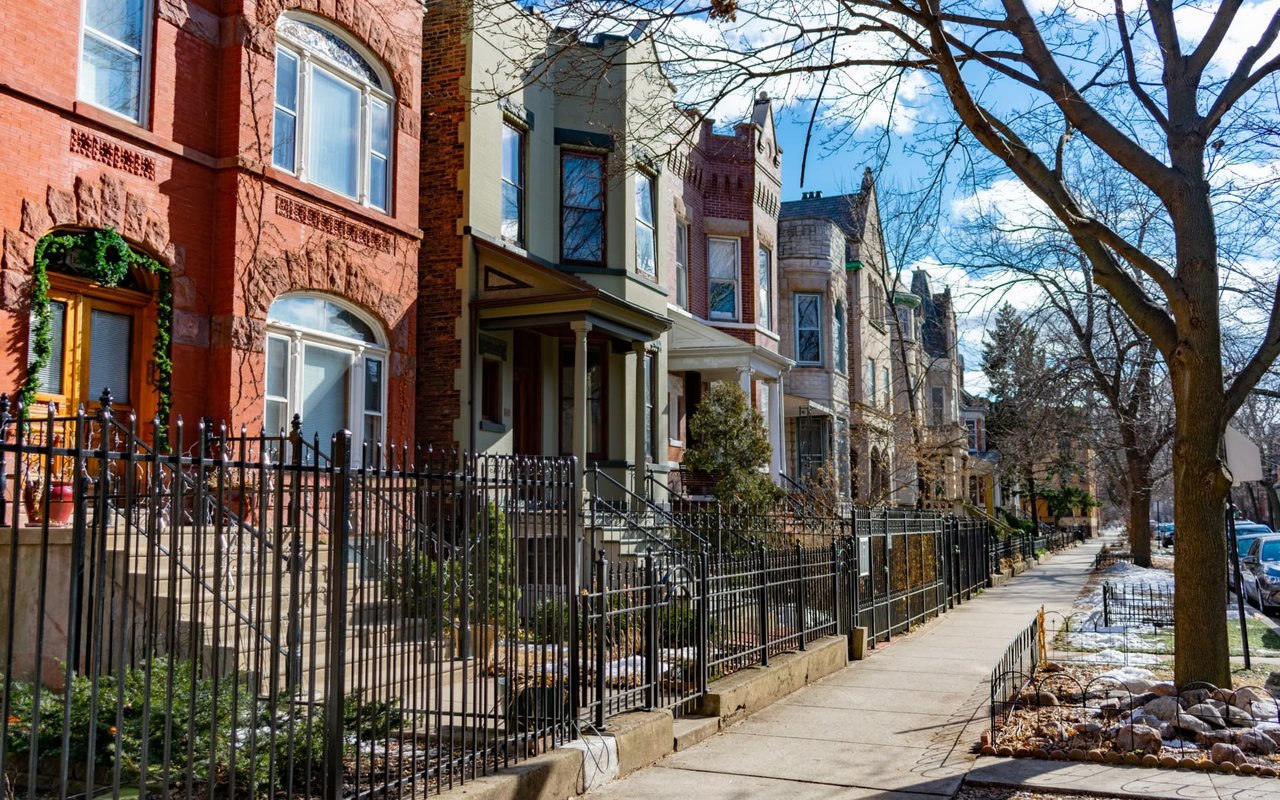
Wicker Park took off after the Great Chicago Fire of 1871, and its streets still show it. Wealthy German and Scandinavian merchants built ornate mansions along Hoyne Avenue, nicknamed "Beer Baron Row," and on the blocks around the park. Later, the neighborhood became the heart of Chicago's Polish community — Division Street was once called the "Polish Broadway." Today you'll find Victorian mansions, greystones, and brick flats alongside converted lofts and newer construction.
3. Food, Drink, and Nightlife
Wicker Park is one of Chicago's dining and nightlife hubs. Longtime favorites include Big Star for tacos and whiskey and The Violet Hour for craft cocktails, and coffee shops like Ipsento double as remote-work spots. Two Michelin-starred restaurants, Kasama and Feld, are just south in Ukrainian Village.
4. Independent Shops, Arts, and Music
Milwaukee Avenue is lined with boutiques, vintage shops, and murals. Volumes Bookcafe is a neighborhood favorite for books and events, and the Flat Iron Arts Building at the six-corner intersection of North, Milwaukee, and Damen has housed working artists' studios for decades. For live entertainment, Subterranean hosts concerts and The Den Theatre stages theater and comedy.
5. Parks and the 606
The neighborhood is named for Wicker Park itself, a 4-acre park with a playground, fieldhouse, dog-friendly area, and a summer farmers market. Along the northern edge, The 606 — the elevated Bloomingdale Trail built on a former rail line — offers nearly three miles of paved trail for walking, running, and biking, connecting Wicker Park to Bucktown, Logan Square, and Humboldt Park.
6. An Engaged Community
For all its energy, Wicker Park keeps a real neighborhood feel. The local chamber of commerce runs Wicker Park Fest each July and the Sunday Wicker Park Farmers Market, and neighborhood groups stay active in planning, preservation, and clean-up efforts.
Wicker Park Housing Market
Measure | Latest |
|---|---|
Median sale price (rolling 12 months) | $672,500 — the highest point in our data set |
Months of supply | 0.5 months |
Median market time | 9 days |
Source: MRED / InfoSparks, rolling 12-month figures through May 2026, all property types. Data deemed reliable but not guaranteed.
What the numbers mean: Wicker Park has one of the tightest inventories in the city. Half a month of supply means that if no new listings came on the market, everything for sale would be gone in about two weeks; a balanced market is usually around six months. After a softer stretch in 2024 and early 2025, prices have snapped back to new highs, and well-priced homes are going under contract in about nine days. For the full analysis, see our Wicker Park market report.
Higher mortgage rates are the main counterweight. With the 30-year fixed above 7% this fall, buyers are more payment-sensitive, so precise pricing matters for sellers. For the bigger picture, see our Chicago housing market outlook.
How Wicker Park Compares to Nearby Neighborhoods
Neighborhood | Median Price | Months Supply | Market Time |
|---|---|---|---|
Wicker Park | $672,500 | 0.5 | 9 days |
$1,032,500 | 1.1 | 9 days | |
$675,750 | 2.2 | 10 days | |
About $767,500* | — | — |
Wicker Park, Bucktown, and Logan Square: MRED / InfoSparks rolling 12-month medians, mid-2026. *Ukrainian Village: Redfin, three months ending March 2026.
Types of Homes in Wicker Park
- Victorian mansions and greystones: the neighborhood's showpieces, concentrated around the park and on Hoyne and Pierce. Many have been restored as single-family homes; others are divided into condos.
- Two- and three-flats: a classic option for owner-occupants who want rental income, and a common candidate for deconversion to a single-family home.
- Workers' cottages and frame homes: smaller vintage single-family homes, often expanded or fully renovated.
- Lofts and condos: from converted industrial and commercial buildings to newer construction near Milwaukee Avenue and the 606. If you're financing a condo, review the association's finances closely — new Fannie Mae and Freddie Mac reserve rules take effect in January 2027.
With much of the housing stock more than a century old, inspections matter. Our vintage home maintenance guide covers what to look for, from masonry to plumbing.
What the Wicker Park Landmark District Means for Owners
The Wicker Park District was designated a Chicago Landmark in 1991 to protect the neighborhood's 19th-century mansions and residential blocks around the park, including Beer Baron Row.
- Exterior changes need review. Work visible from the street on a building in the district — windows, masonry, porches, roofs, additions — generally requires approval from the Commission on Chicago Landmarks before the City issues a permit.
- Demolition is restricted for buildings that contribute to the district's historic character.
- Interiors aren't regulated. Kitchens, baths, and layouts follow normal permitting.
- It protects the streetscape — a big part of why these blocks hold their value.
If you're buying in or near the district and planning exterior work or an addition, confirm the property's status and talk to the City's historic preservation staff before finalizing your budget.
Pros and Cons of Living in Wicker Park
Pros | Cons |
|---|---|
Exceptional walkability — Walk Score 96 | Very limited inventory — about half a month of supply |
Two Blue Line stations — direct to the Loop and O'Hare | High and rising prices, plus property taxes to match |
Dining, nightlife, and shopping on your doorstep | Noise and crowds near Milwaukee, Damen, and Division, especially on weekends |
Historic architecture and a protected landmark district | Tight parking — permit zones are common; garage spaces carry a premium |
The 606 and Wicker Park for outdoor space | Older homes need upkeep, and landmark review adds a step for exterior work |
Schools in Wicker Park
Wicker Park is served by Chicago Public Schools. Schools located in and around the neighborhood include A.N. Pritzker School, LaSalle II Magnet School, Jonathan Burr Elementary, and Sabin Dual Language Magnet School. Attendance boundaries and magnet admissions vary, so check a specific address with the CPS School Locator before you buy.
Tips for Buying a Home in Wicker Park
- Get fully pre-approved before you tour. With homes selling in about nine days, there's no time to start the loan process after you find the one. Compare more than one lender, and ask about strategies like using a seller credit to buy down your rate.
- Know the micro-markets. A block on the park, a street near the Blue Line, and a home steps from Milwaukee Avenue's nightlife can be very different in price and feel.
- Budget beyond the price. Factor in property taxes, HOA dues for condos, parking, and maintenance on a vintage home.
- Write a strong, clean offer. In multiple-offer situations, flexible timing and a solid pre-approval can matter as much as price.
- Inspect thoroughly. Consider a sewer scope for older homes, and review condo association budgets and reserves.
Frequently Asked Questions
Is Wicker Park a good place to live?
For buyers who want walkability, transit, historic homes, and one of Chicago's best dining and entertainment scenes, yes. The main trade-offs are high prices, very limited inventory, busy commercial streets, and tight parking.
How much does a home cost in Wicker Park?
The rolling 12-month median sale price recently reached about $672,500 across all property types. Condos sell for less, and restored single-family homes and mansions sell for well over $1 million.
What's the difference between Wicker Park and Bucktown?
Bucktown sits just north of the 606 and is generally more residential, with more single-family homes and a higher median price — now above $1 million. Wicker Park has more nightlife and retail, two Blue Line stations, and a wider mix of condos and multi-unit buildings.
Which Blue Line stops serve Wicker Park?
Damen, at North, Milwaukee, and Damen, and Division, at Division, Milwaukee, and Ashland. Both offer direct service to the Loop and O'Hare.
How can I research safety in Wicker Park?
We encourage buyers to review current data directly from the Chicago Police Department and the City of Chicago's data portal, walk the area at different times of day, and talk with neighbors to form their own view.
Should You Move to Wicker Park?
If you want walkability, great transit, historic architecture, and a neighborhood with its own identity minutes from the Loop, Wicker Park is hard to beat. Just come prepared: with half a month of supply and nine-day market times, the buyers who win here are the ones who are ready before the right home hits the market.
Thinking of Buying or Selling in Wicker Park?
The Camille Canales Group works across Wicker Park, Bucktown, and Chicago's North and Northwest Side, and tracks this market closely. Whether you want to know what your home is worth or how to compete for the right one, we're happy to talk.
Market data from MRED / InfoSparks and Redfin; data deemed reliable but not guaranteed. Walk Score data from walkscore.com. Neighborhood boundaries vary by source. Landmark district information is general; confirm a specific property's status with the City of Chicago. Restaurant and business information is subject to change.