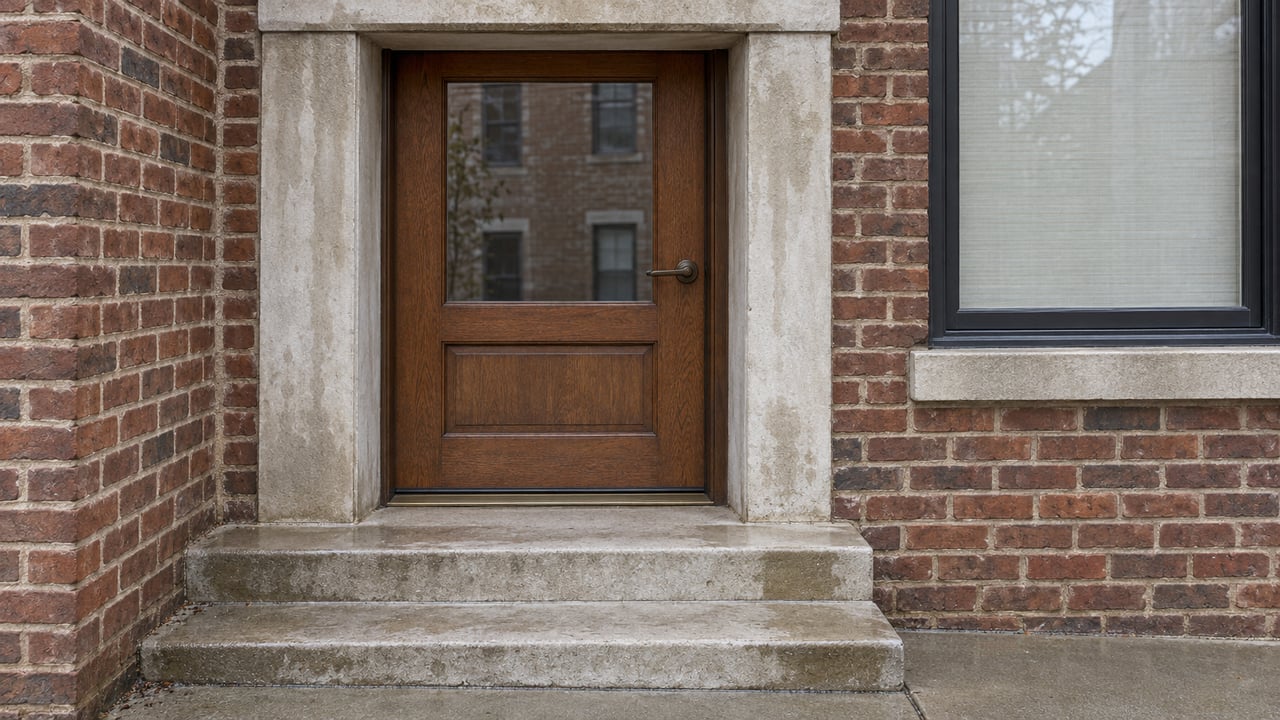
Home insurance is one of the last things most buyers think about and one of the first things that can delay a closing. Your lender won't fund the loan without proof of coverage, and in Chicago — with older housing stock, basements, combined sewers, and a lot of condos and two-flats — the "standard" policy often leaves real gaps.
This guide walks Chicago-area buyers through when to start contacting insurance agents, the questions worth asking, and how coverage changes depending on whether you're buying a condo, a single-family home, or a multi-unit building.
The short version
- Start getting quotes while you're touring homes, and lock in a policy as soon as you're under contract.
- Add sewer and drain backup coverage if the property has a basement — it isn't included by default.
- Condo buyers need an HO-6 policy sized to what the association's master policy doesn't cover.
- Two-flat and three-flat buyers need coverage for the rental units, including lost rent and tenant liability.
Why Home Insurance Deserves More Attention in Chicago Right Now
Illinois premiums have climbed fast. State Farm, the state's largest home insurer, raised Illinois homeowners rates by an average of 27.2% in 2025 and followed with an average 8% increase in 2026 (new policies from October 1, renewals from December 1), according to Kiplinger. Allstate has posted its own rounds of increases as well.
Illinois has also been an outlier in how rates are regulated. In August 2026, Governor Pritzker signed House Bill 4273 (Public Act 104-0752), which gives the Illinois Department of Insurance more authority to review homeowners and auto insurance rates. Those new requirements take effect July 1, 2027.
What that means for buyers: the price of insurance can vary a lot from one carrier to the next, and it's a real line item in your monthly payment. Shopping early and comparing carefully pays off.
When Should You Start Reaching Out to Insurance Agents?
Earlier than most people think. Here's the timeline we recommend to our buyers:
When | What to do |
|---|---|
During pre-approval | Ask your lender to include a realistic insurance estimate in your payment calculation. Get a ballpark quote or two for the type of property you're targeting so your budget isn't built on an outdated number. |
While touring homes | Talk to one or two agents so you know what drives price and insurability — roof age, electrical, plumbing, heating, and basement setup. If a home has an older roof or original wiring, check before you write an offer. |
Once you're under contract | Get formal quotes right away, during attorney review and inspection. Use the inspection report to answer underwriting questions accurately. Ask the seller (through your attorney) for the property's claims history, often called a CLUE report. |
2–3 weeks before closing | Bind your policy and send the declarations page or binder to your lender, listing the lender as mortgagee. The effective date should be your closing date. |
At closing | Your first year's premium is typically paid at or before closing, and your lender will usually set up an escrow account to cover renewals. |
Why not wait? Carriers have become stricter about older homes. A 25-year-old roof, knob-and-tube wiring, or a history of water claims can mean a higher premium, reduced roof coverage, or a carrier that won't write the policy at all. You want to find that out with time to negotiate or adjust — not the week before closing.
What to Look For in a Home Insurance Policy
1. Dwelling coverage based on rebuild cost, not purchase price
Your dwelling coverage should reflect what it would cost to rebuild the structure, not what you paid. In Chicago, land is a big part of a home's value, so rebuild cost can be well below your purchase price — or above it for a vintage greystone with masonry and millwork that's expensive to replicate. Ask how the carrier calculated the number.
2. Replacement cost vs. actual cash value
Replacement cost pays to repair or replace with new materials. Actual cash value (ACV) subtracts depreciation, which can leave you with a much smaller check. More carriers now apply ACV to older roofs, so read that section closely.
3. Sewer and drain backup coverage
This is the most important add-on for Chicago buyers. Heavy storms can overwhelm the city's combined sewer system and push water up through floor drains. Standard homeowners policies generally exclude sewer backup unless you add an endorsement, and many endorsements cap out at $5,000–$10,000 — rarely enough for a finished basement. If you're buying a home with a finished lower level, ask about higher limits.
4. Flood insurance (it's separate)
Sewer backup and flood are not the same thing. Flood coverage — usually through the National Flood Insurance Program or a private carrier — covers surface water entering the home. Your lender will require it if the property is in a FEMA high-risk flood zone; outside those zones it's optional but worth pricing out.
5. Ordinance or law coverage
If an older home is damaged, the city may require repairs to meet current building code — new electrical, updated egress, and so on. Ordinance or law coverage helps pay for those upgrades. For Chicago's vintage housing stock, it matters.
6. Deductibles, including wind/hail
Some policies carry a separate wind/hail deductible that is a percentage of your dwelling coverage (for example, 1% or 2%) rather than a flat dollar amount. On a $500,000 dwelling limit, 2% is $10,000 out of pocket. Know which deductible applies to which kind of claim.
7. Liability and loss of use
Liability covers you if someone is injured on your property; loss of use pays for temporary housing if you can't live in the home after a covered loss. Many buyers raise liability limits or add an umbrella policy, especially if they'll have tenants.
Questions to Ask Insurance Agents
Get at least two or three quotes, ideally including one from an independent agent who can compare multiple carriers. Then ask each of them:
- Are you captive or independent? Captive agents sell one company's policies; independent agents can shop several.
- How did you calculate the dwelling coverage amount? Is there extended or guaranteed replacement cost if rebuilding costs more than expected?
- Is the roof covered at replacement cost or actual cash value?
- Is sewer and drain backup included? What's the limit, and can I increase it?
- Do I need flood insurance for this address?
- What are my deductibles — all-peril, wind/hail, and water?
- Does this policy include ordinance or law coverage? How much?
- Will the age or condition of the roof, electrical, plumbing, or furnace affect eligibility or price? Do I need to update anything after closing?
- What discounts are available? Common ones include bundling with auto, monitored alarms, water-leak sensors, newer roofs, and paying annually.
- How has this carrier's pricing changed at renewal recently? A low first-year quote matters less if renewals jump.
- What happens if I renovate or the home is vacant during work? Many policies limit coverage for vacant or under-construction homes.
- How do claims work, and who do I call?
Condo vs. Single-Family vs. Multi-Unit: How Coverage Differs
Condo | Single-Family | 2–4 Unit (owner-occupied) | |
|---|---|---|---|
Typical policy | HO-6 (condo unit owner) | HO-3 or HO-5 | Homeowners policy that allows rental units, or a dwelling/landlord policy |
Who insures the structure | The association's master policy, plus your HO-6 for what it doesn't cover | You | You — the entire building |
Key add-ons | Loss assessment, improvements and betterments, sewer backup | Sewer backup, ordinance or law, extended replacement cost | Loss of rents, higher liability or umbrella, sewer backup, ordinance or law |
Documents to review | Declaration, bylaws, and the master policy certificate | Inspection report, seller's claims history | Inspection report, leases, claims history |
Buying a condo in Chicago
Under the Illinois Condominium Property Act, the condo association must carry a master insurance policy. What that policy covers inside your unit depends on the association's declaration and board decisions:
- "Bare walls" master policy: the association covers the structure, and you insure the interior finishes — flooring, cabinets, countertops, fixtures, appliances.
- "All-in" master policy: the association covers original interiors too, so your HO-6 can focus on belongings, liability, and upgrades.
Ask for the master policy certificate and the declaration early, ideally during attorney review. Then make sure your HO-6 includes:
- Loss assessment coverage — if the building has a major loss and the master policy falls short, or the association passes its deductible on to owners, this helps cover your share.
- Coverage that matches the master policy deductible — many associations charge the master policy deductible back to the unit where a leak or loss started. If that deductible is $10,000 or $25,000, your HO-6 should be built to handle it.
- Improvements and betterments — upgrades you or prior owners made aren't always covered by the master policy.
This is especially worth checking in the small, self-managed two- to six-unit condo buildings common in Logan Square, Wicker Park, and Bucktown, where master policy details can vary widely.
Buying a single-family home
You're responsible for insuring the whole property — house, garage, fences, and belongings. For Chicago's older single-family homes, workers cottages, and frames, focus on accurate rebuild cost, replacement cost on the roof, ordinance or law coverage, and sewer backup limits that match how you'll use the basement. An HO-5 policy offers broader "open peril" coverage on belongings than a standard HO-3, often for a modest increase in price.
Buying a two-flat, three-flat, or four-unit building
Multi-unit buildings are a classic Chicago path to ownership, and they need more thoughtful coverage:
- Owner-occupied vs. investment: If you'll live in one unit, some carriers will write a homeowners policy that accommodates the rental units; others require a dwelling or landlord policy. If you won't live there, expect a landlord (dwelling fire) policy. Buildings with five or more units usually move to commercial coverage.
- Loss of rents (fair rental value): If a fire or water loss makes a unit unlivable, this replaces the rental income you lose while it's repaired — often critical for covering your mortgage.
- Liability: More people living on the property means more exposure on shared stairs, porches, walks, and laundry areas. Consider higher liability limits or an umbrella policy.
- Tenants' belongings aren't yours to insure: Your policy covers the building, not your tenants' stuff. Requiring renters insurance in your leases protects everyone.
- Basement units: If there's a garden or basement unit, sewer backup coverage and limits matter even more.
Frequently Asked Questions
Is homeowners insurance required in Illinois?
No state law requires it, but virtually every mortgage lender does, and condo associations commonly require unit owners to carry an HO-6 policy.
How far in advance should I get home insurance before closing?
Start quoting while you're house hunting and bind the policy at least two to three weeks before closing so your lender has the documents it needs.
Does homeowners insurance cover basement flooding in Chicago?
It depends on how the water got in. Sewer or drain backup is generally covered only if you add a sewer backup endorsement. Surface flooding needs a separate flood policy. A sudden burst pipe inside the home is usually covered by a standard policy.
What's the difference between an HO-3 and an HO-6?
An HO-3 covers a house you own outright, structure and all. An HO-6 is for condo owners and covers your belongings, liability, and the parts of your unit the association's master policy doesn't.
Can I use a regular homeowners policy for a two-flat I live in?
Sometimes. Some carriers will write a homeowners policy for an owner-occupied two- to four-unit building with the right endorsements; others require a dwelling or landlord policy. Tell the agent upfront how many units there are and which ones are rented.
Buying in Chicago? Let's Talk Through It.
The Camille Canales Group helps buyers across Logan Square, Wicker Park, Bucktown, Lincoln Park, Andersonville, and beyond plan for the full cost of homeownership — insurance included — so there are no surprises at the closing table.
Start your home search with us, call (773) 232-5282, or email [email protected].
This article is for general information only and isn't insurance or legal advice. Coverage, pricing, and eligibility vary by carrier and property. Talk to a licensed insurance agent about your specific situation.